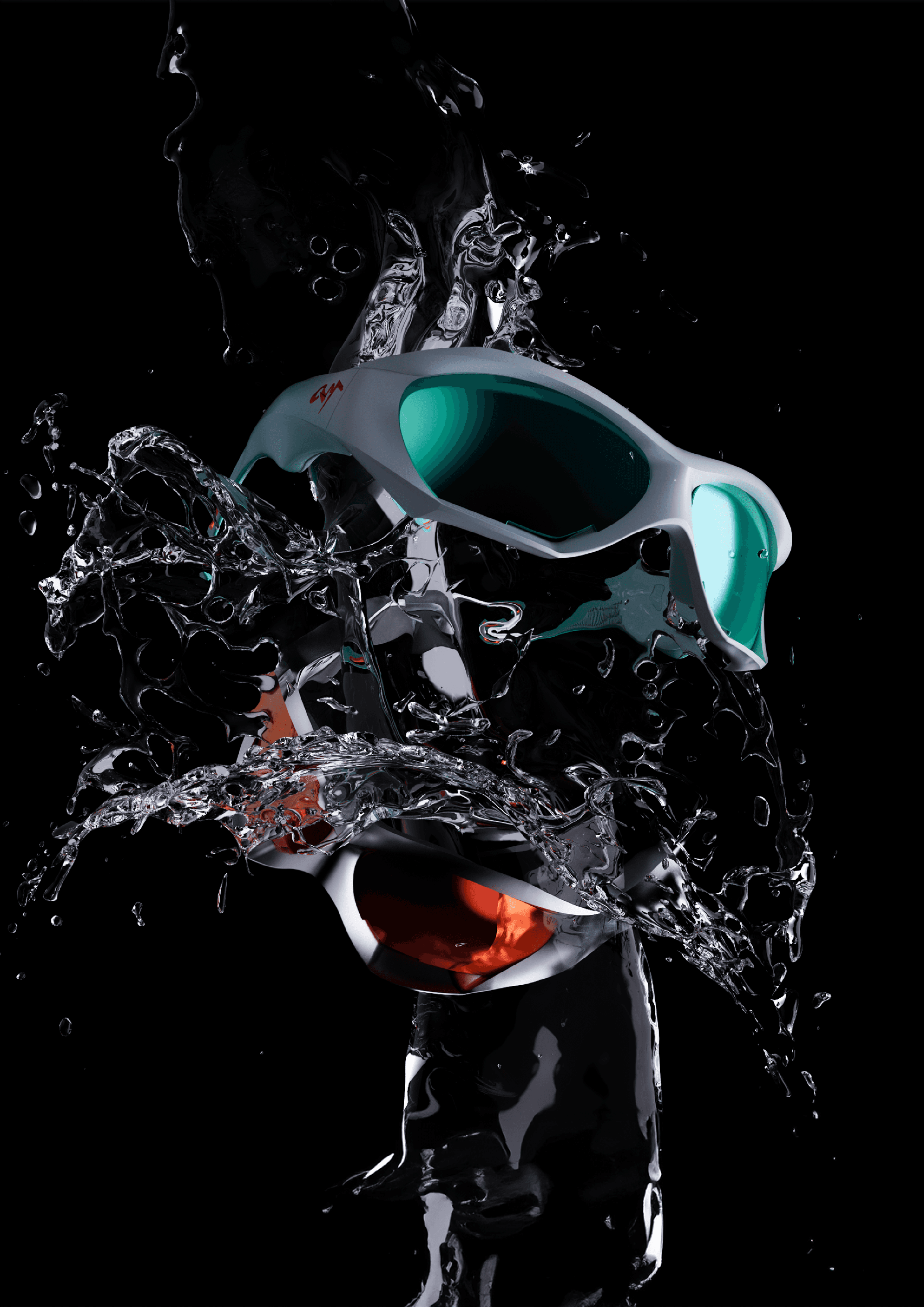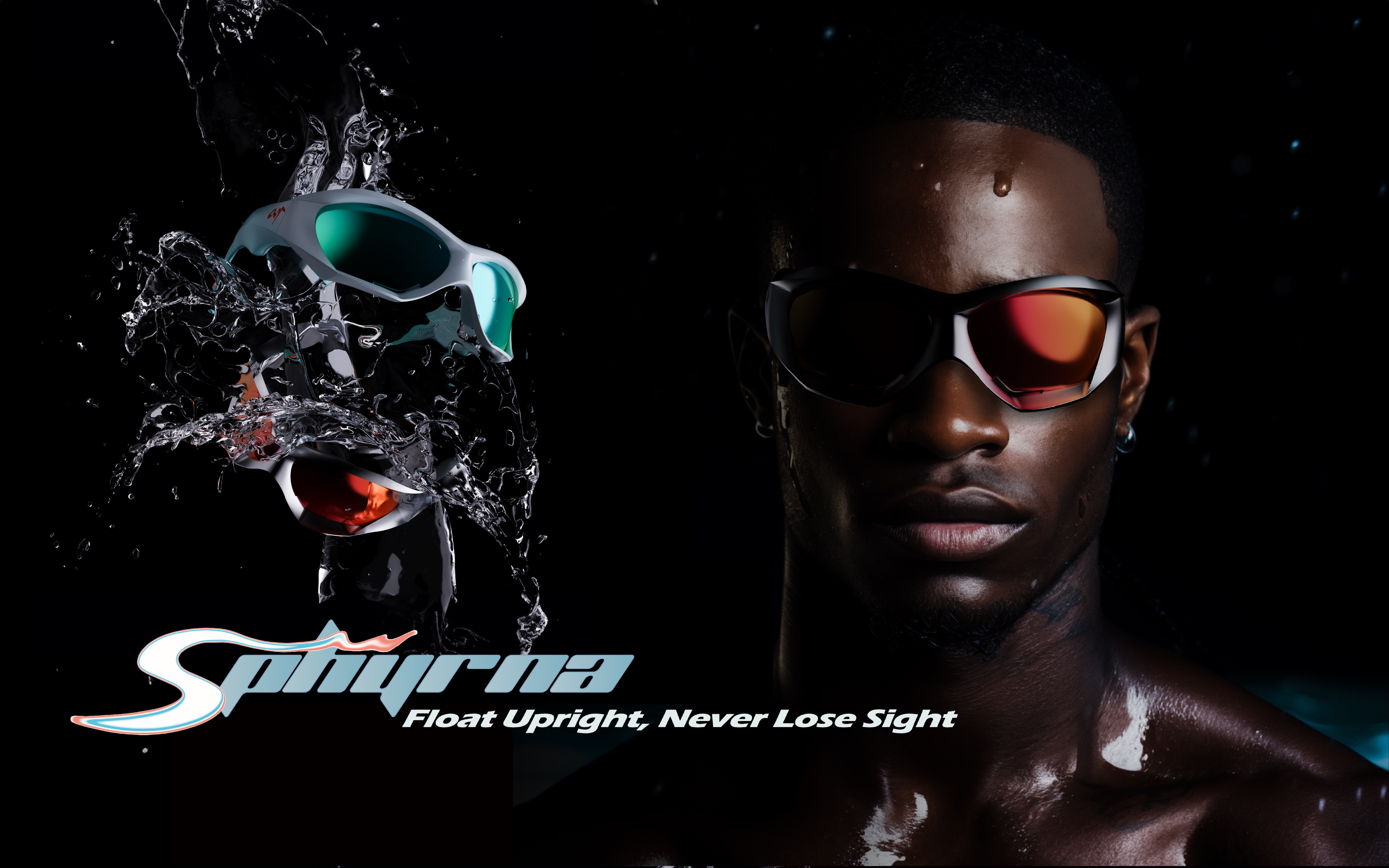
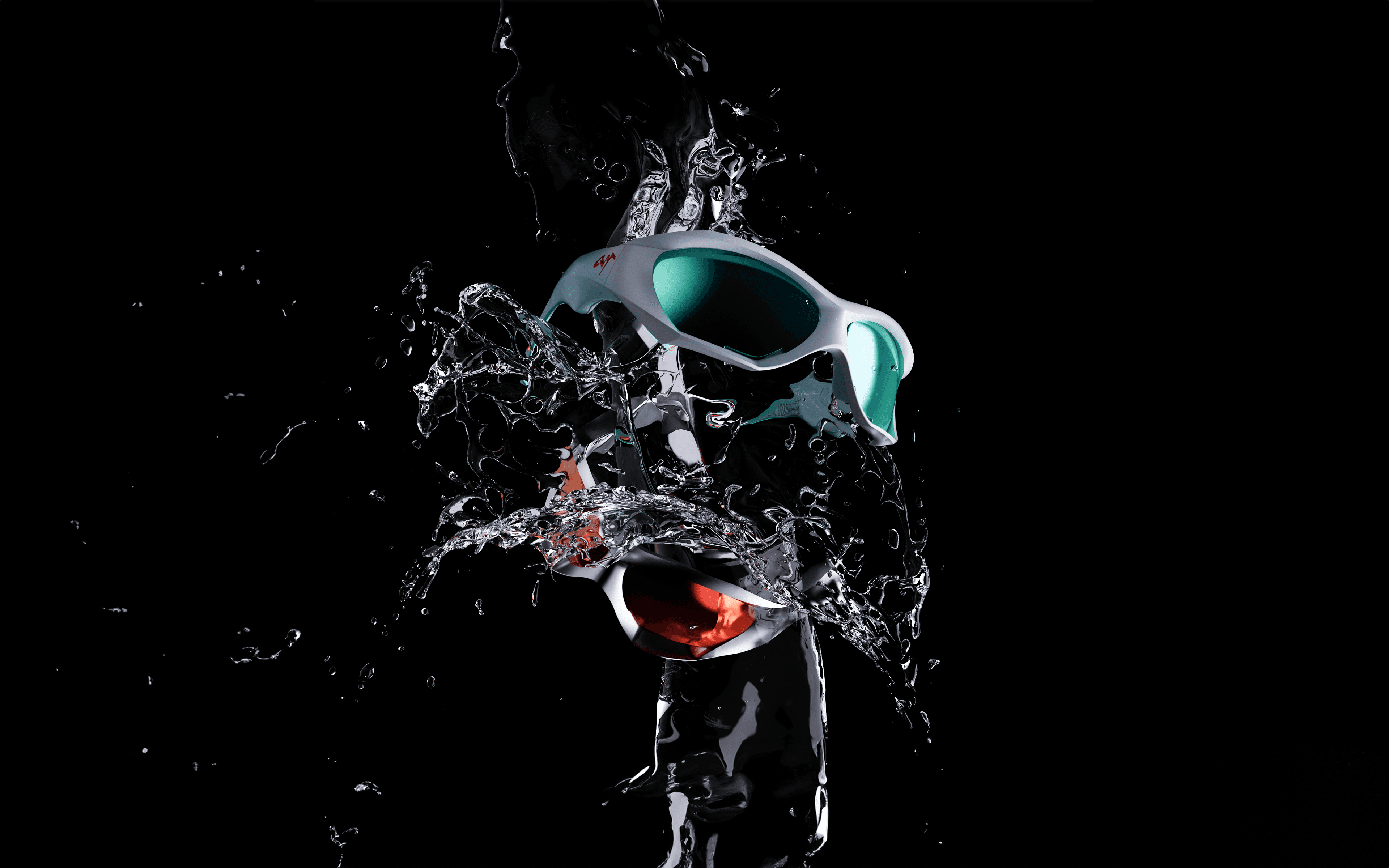

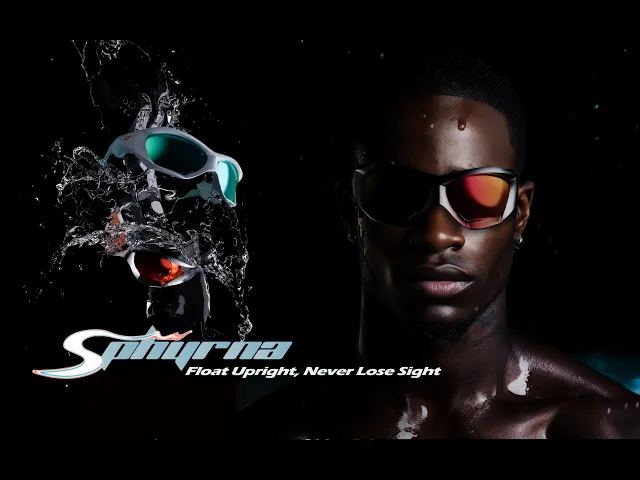
Float upright, never lost sight.
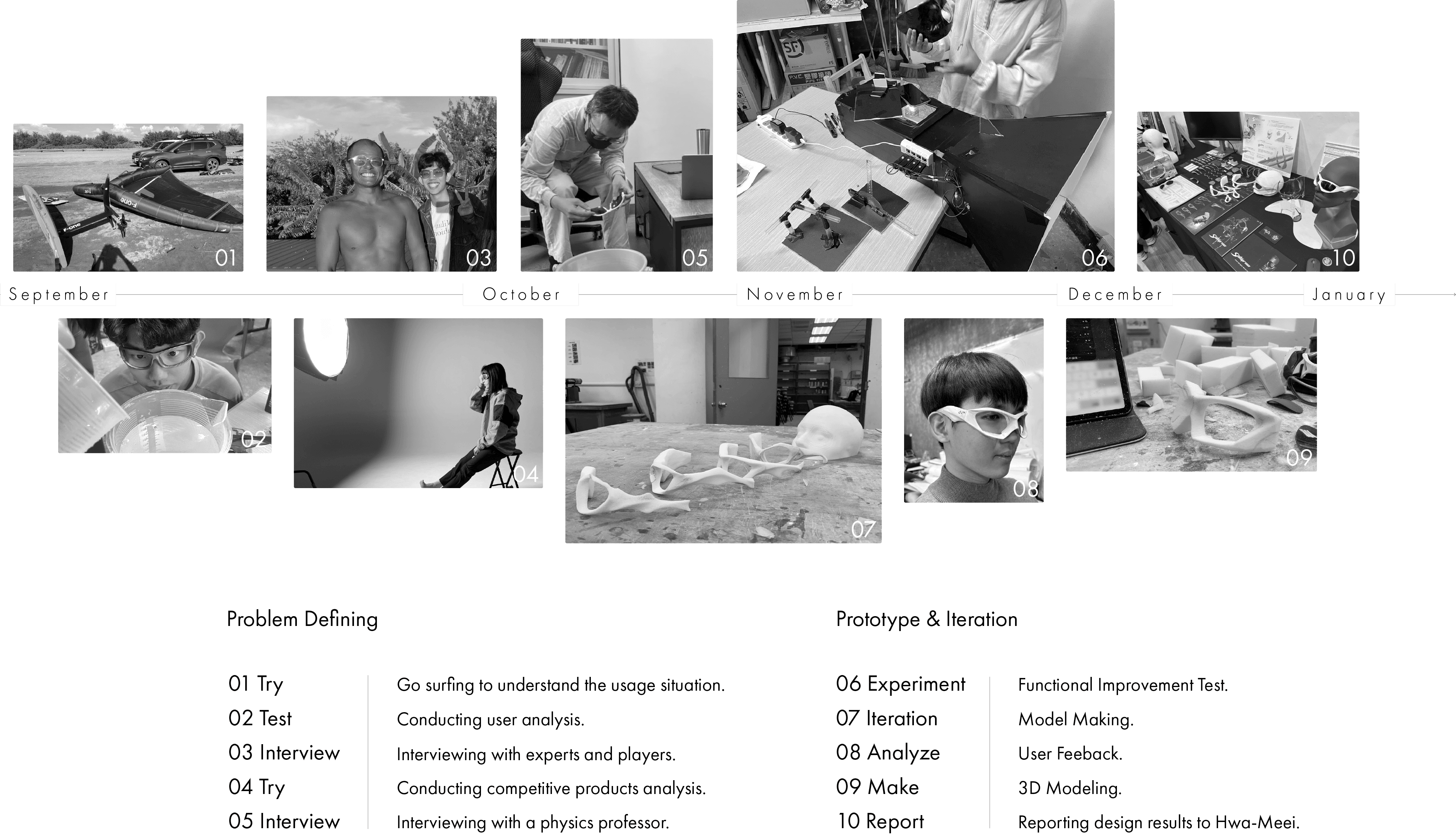
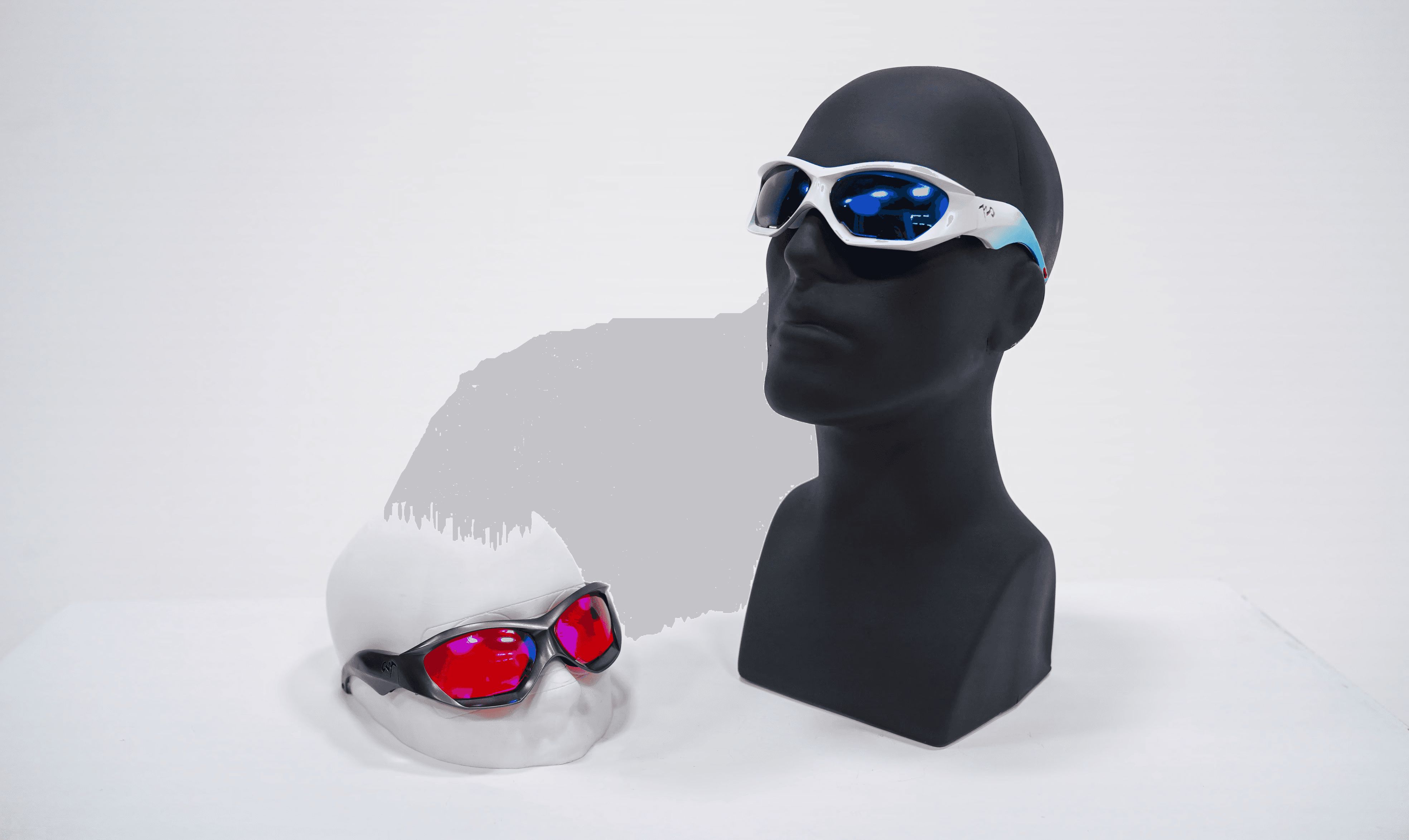
Collaborating with Hwa-Meei Company, we have designed water sports eyewear specifically tailored for aquatic activities. With its innovative floating and color design, this eyewear ensures users can easily retrieve it after falling into water.
Design Background
With the end of the pandemic, outdoor activities have regained popularity, with a particular focus on water sports.
However, eyewear specifically designed for intense water activities remains quite scarce in the market.
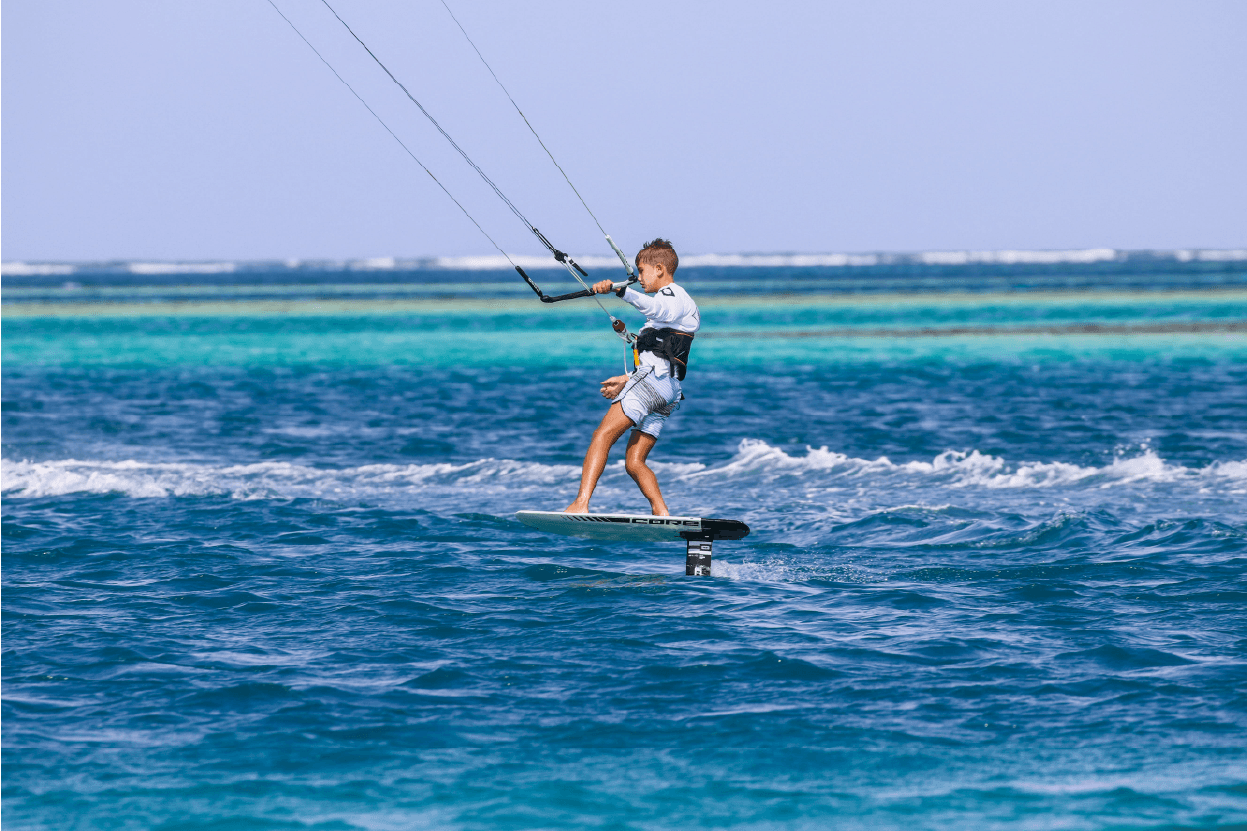
About Hwa-Meei
Hwa-Meei is a Taiwan-based eyewear manufacturer specializing in precision metal frame engineering, bridging complex design intent with durable, scalable production through advanced metal forming and structural expertise.
TARGET USER
The primary target users are intermediate to advanced water sports enthusiasts aged 20 to 50 who require reliable visibility, stability, and comfort in dynamic aquatic environments. The product is positioned in the mid tier market, offering a balance of performance, durability, and accessibility.
20 - 50
years old
USD 60 -
USD 150
High
Professionalism
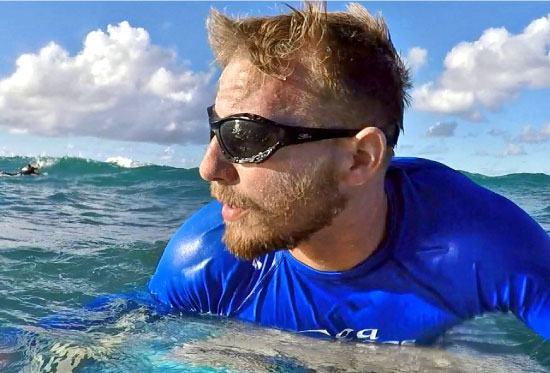
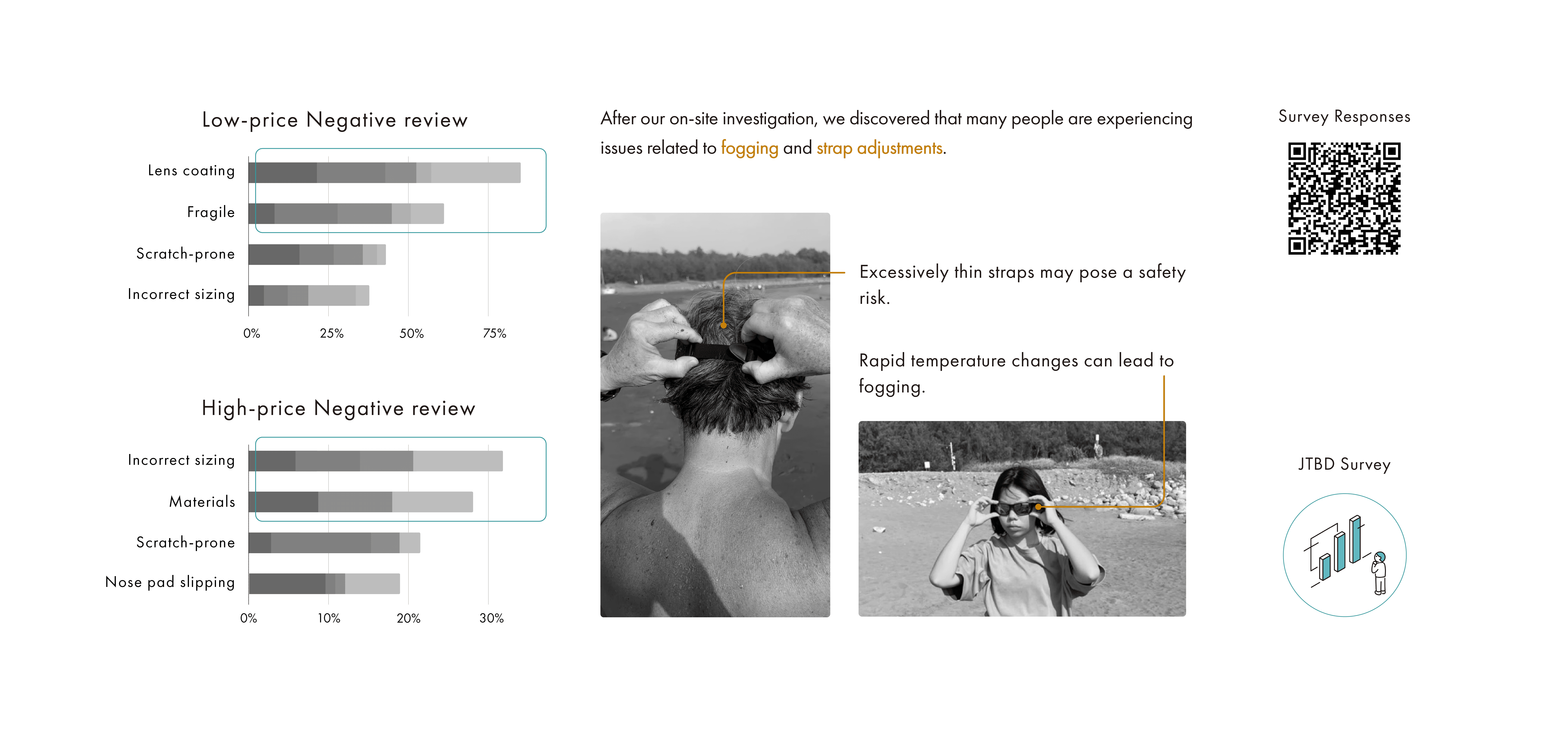
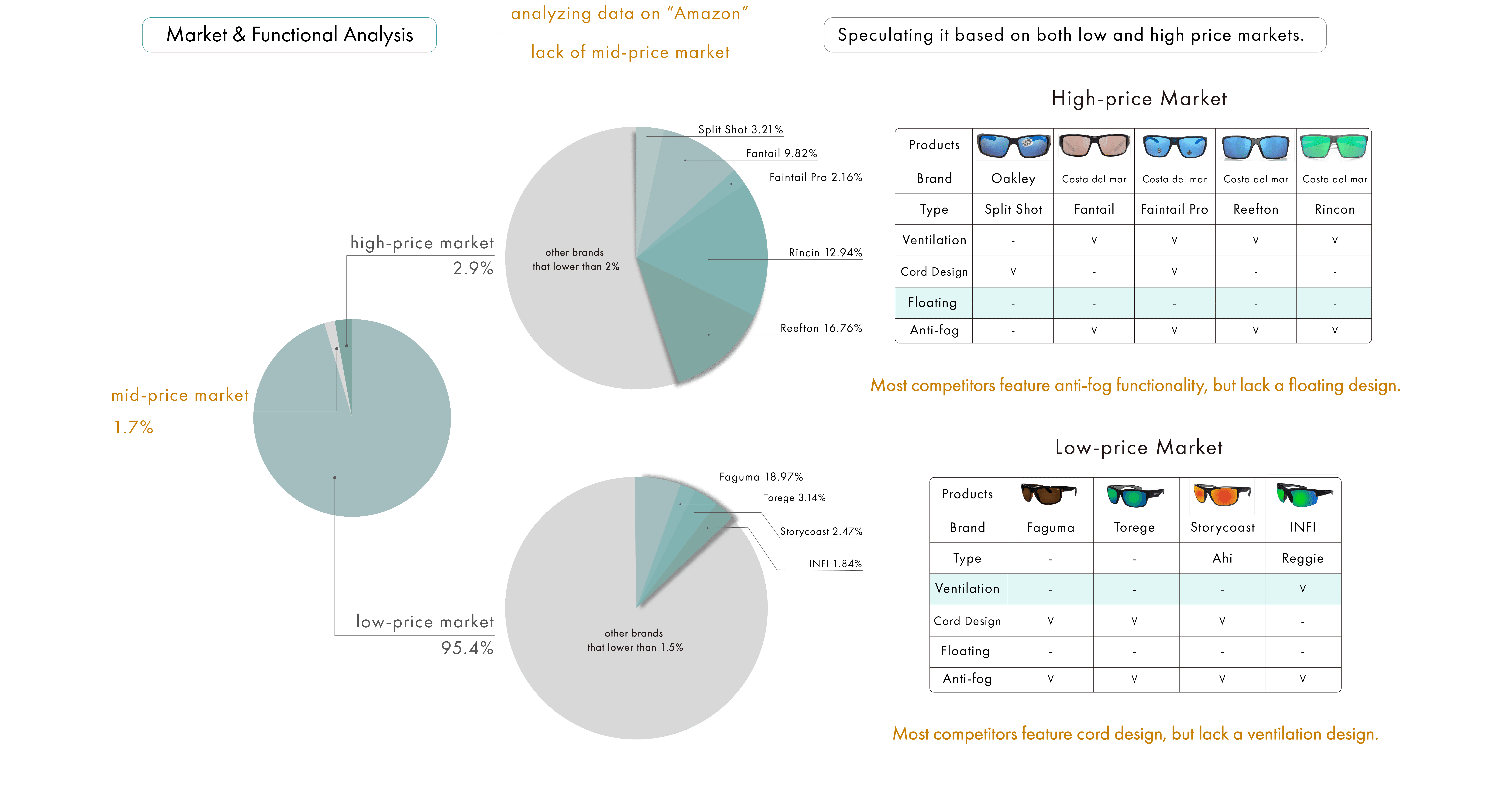
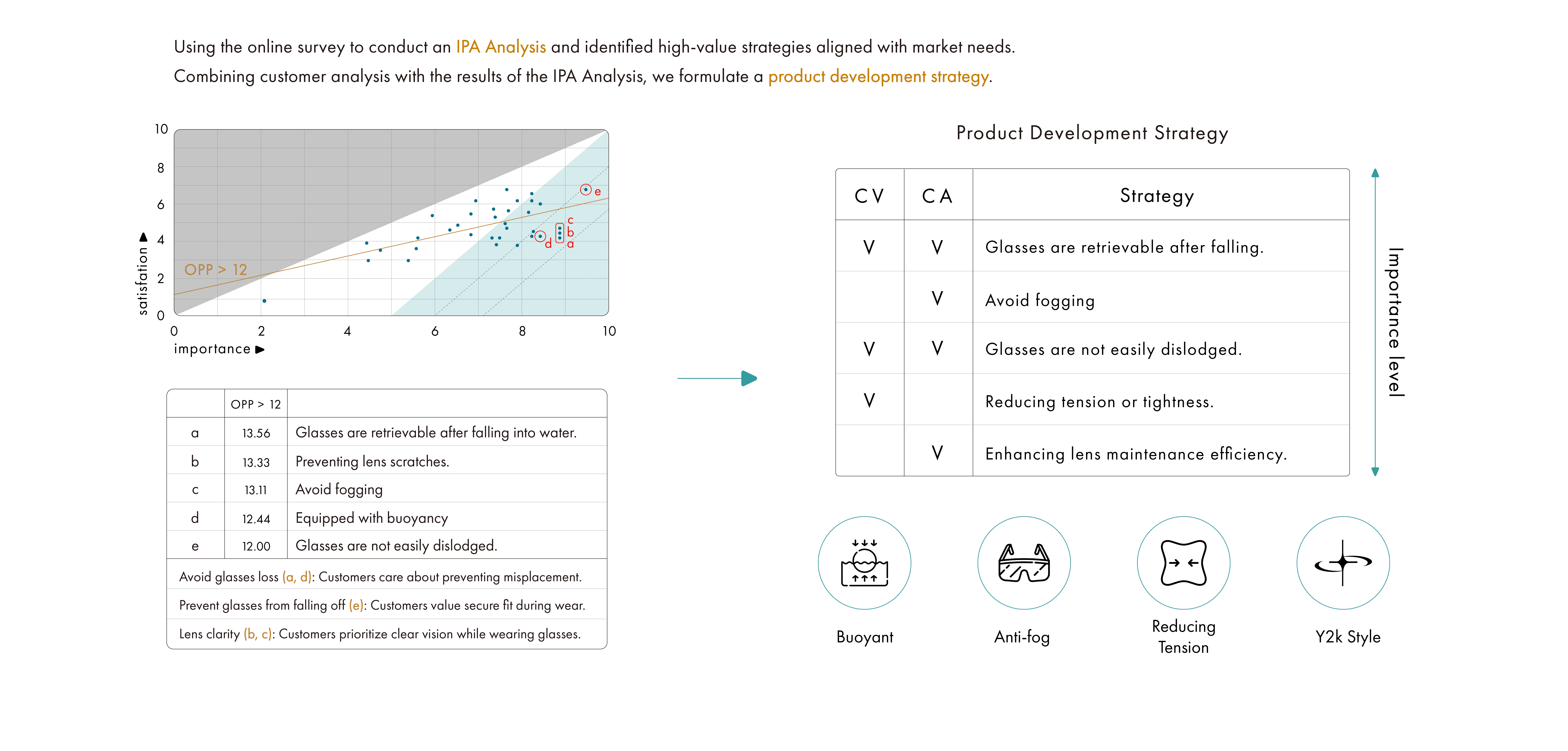
CUSTOMER ANALYSIS | INVESTIGATION
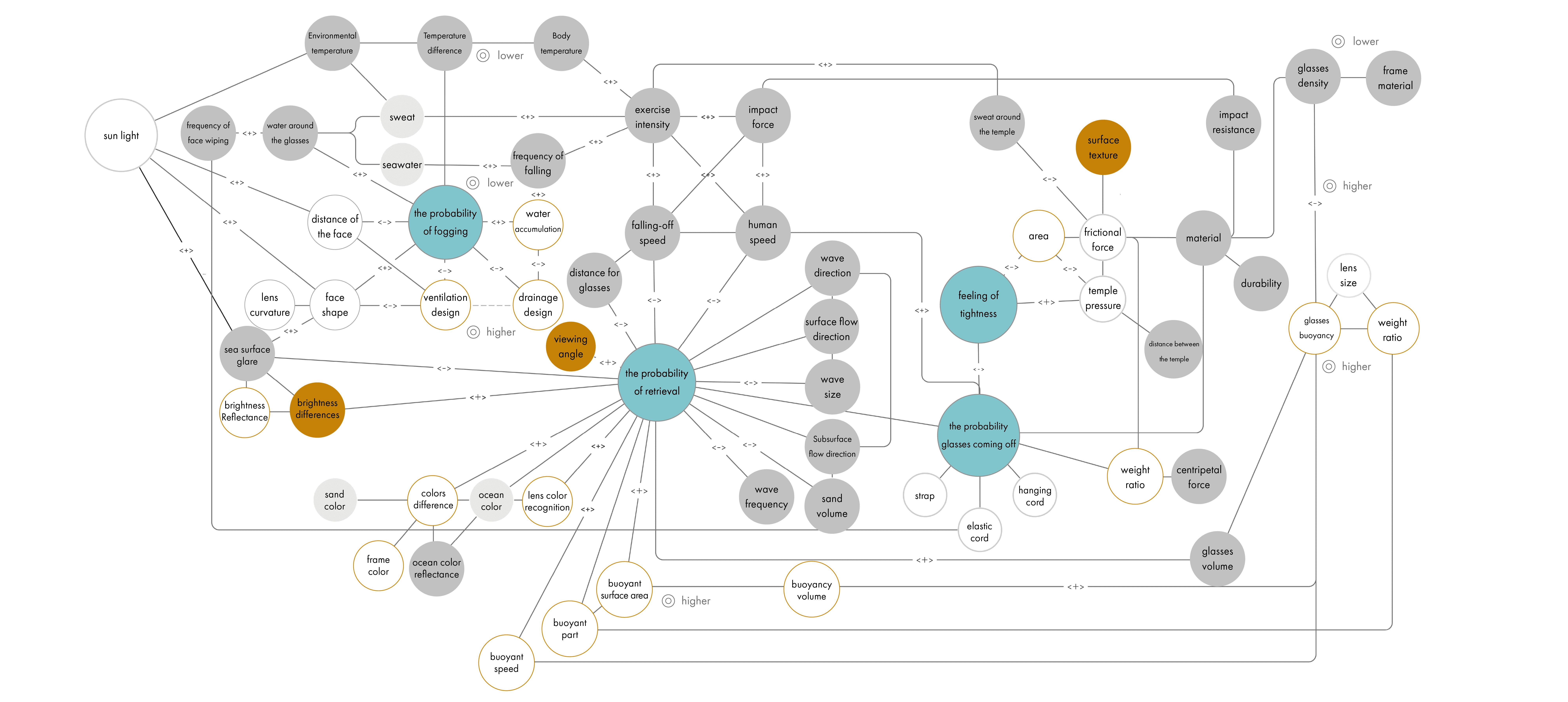
CAUSAL RELATIONSHIP MAP
EXPERIMENT - BUOYANT SPEED
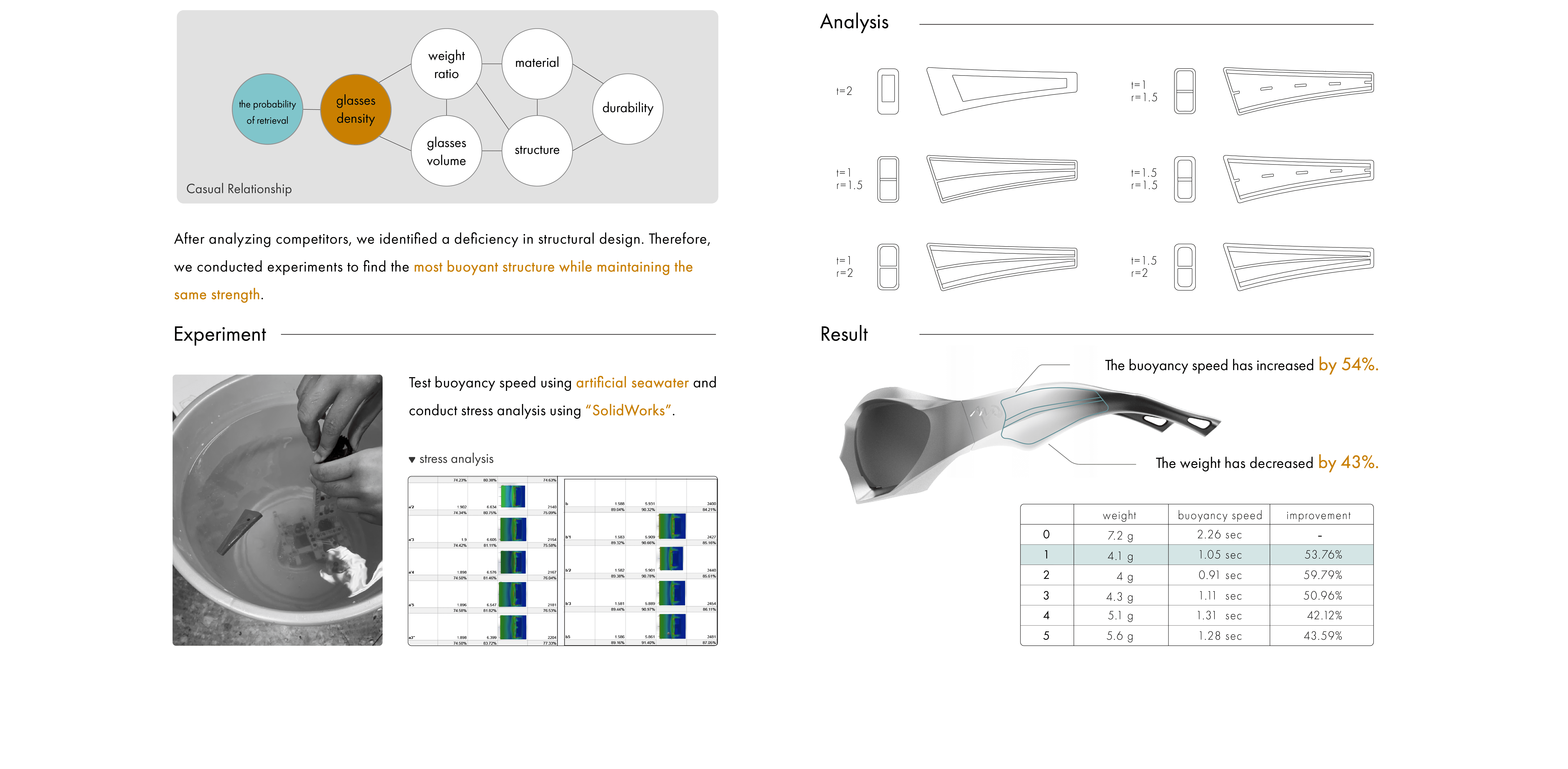
To quantify the effect of geometry on buoyant rise time, We assembled modular prototypes using 3D printed components and tested them in artificial seawater.
The experiment isolated variables such as displacement volume and center-of-mass alignment, enabling comparative evaluation across multiple configurations.
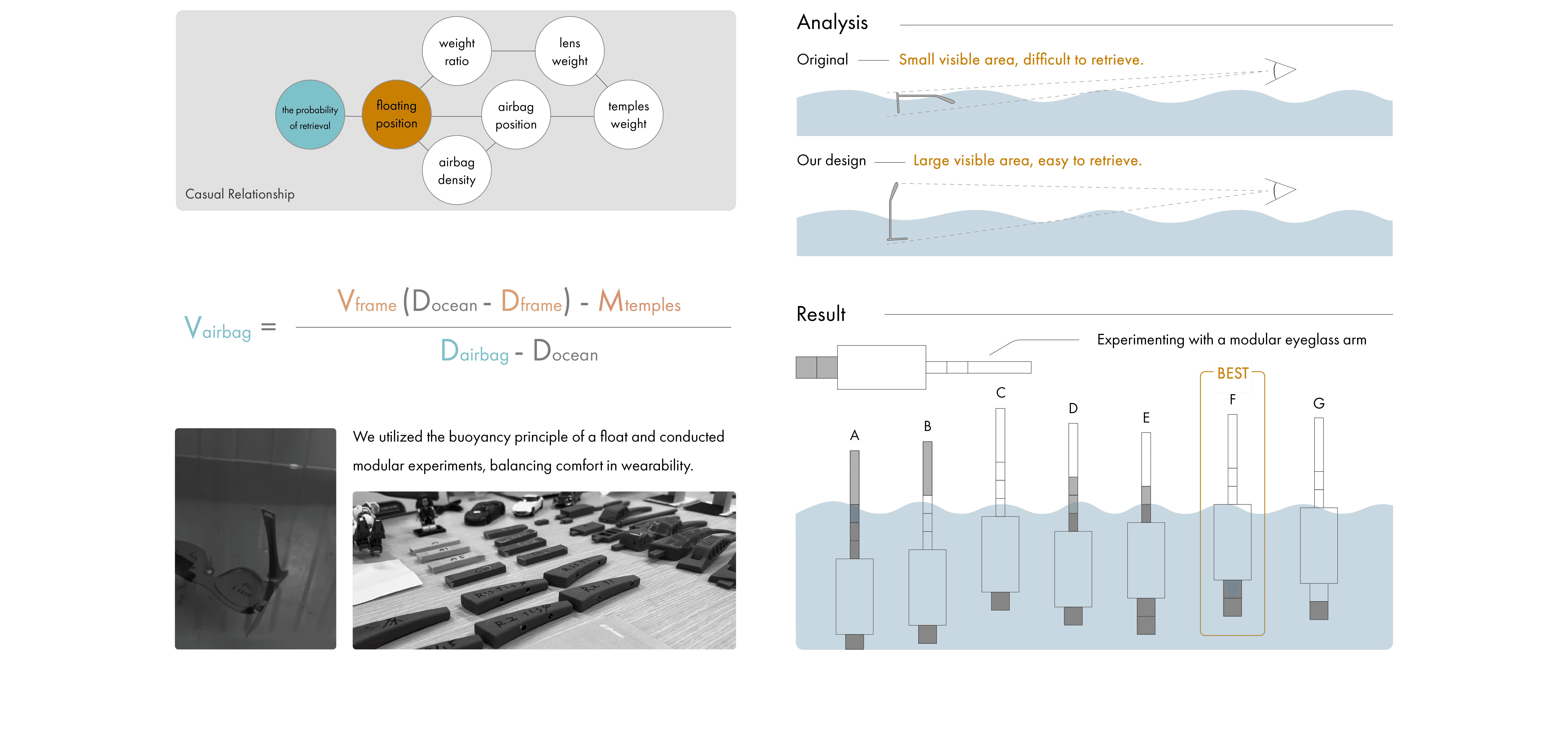
Buoyancy Orientation Simulation
A simulation comparing horizontal and vertical float orientations shows a significant increase in visible area when the eyewear remains upright.
EXPERIMENT - COLORS
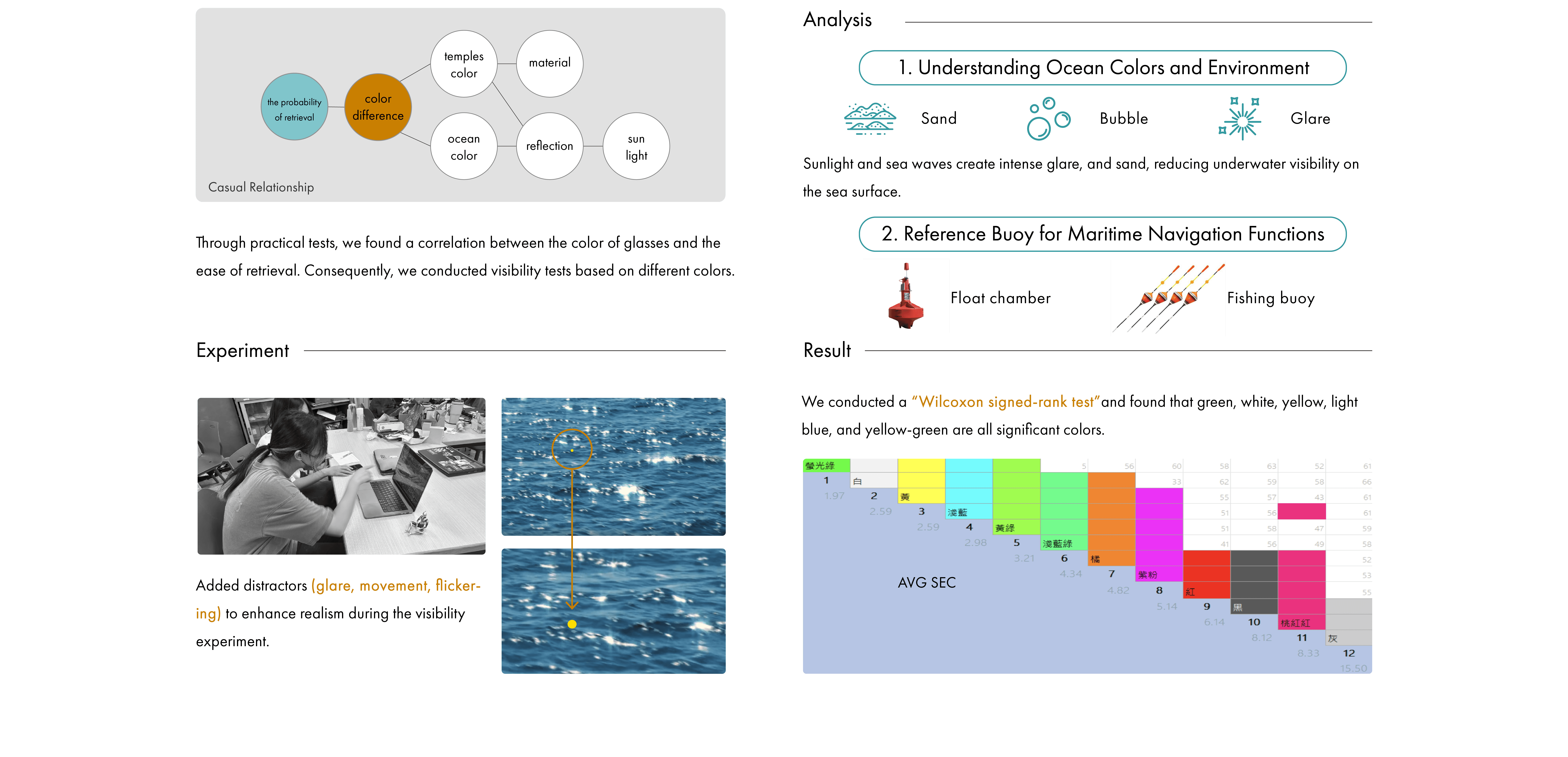
Participants searched for eyewear colors on a simulated ocean surface, and their response times were recorded.
The test reveals which colors remain most visible against glare and water movement.
EXPERIMENT - VENTILATION DESIGN
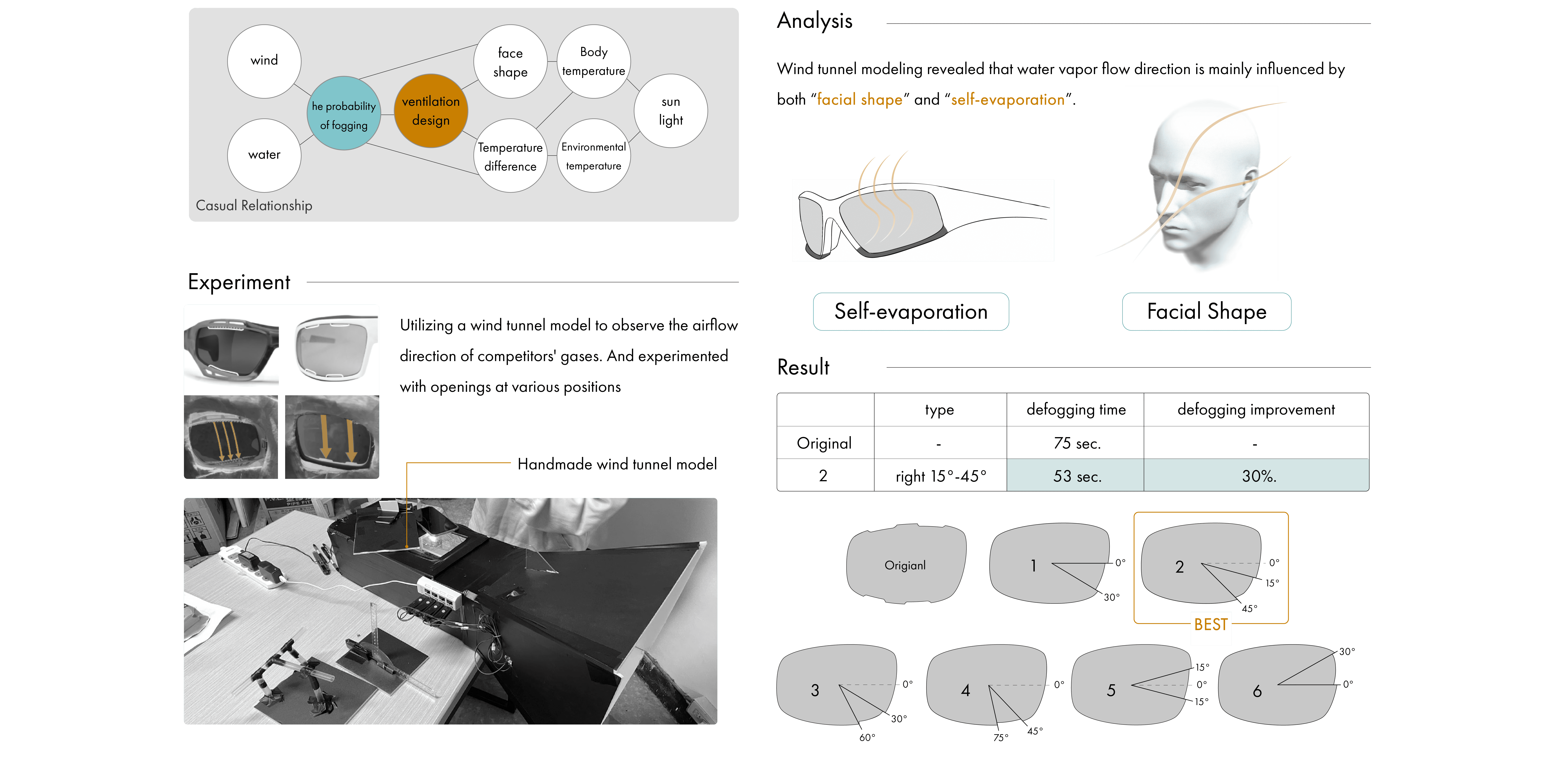
WIND TUNNEL TESTING
We built a small scale wind tunnel to test how different vent placements influence fog dissipation.
By comparing multiple opening configurations under controlled airflow, we identified which geometries clear moisture the fastest and provide the most effective ventilation during high exertion water activities.
EXPERIMENT - AIRFLOW DESIGN
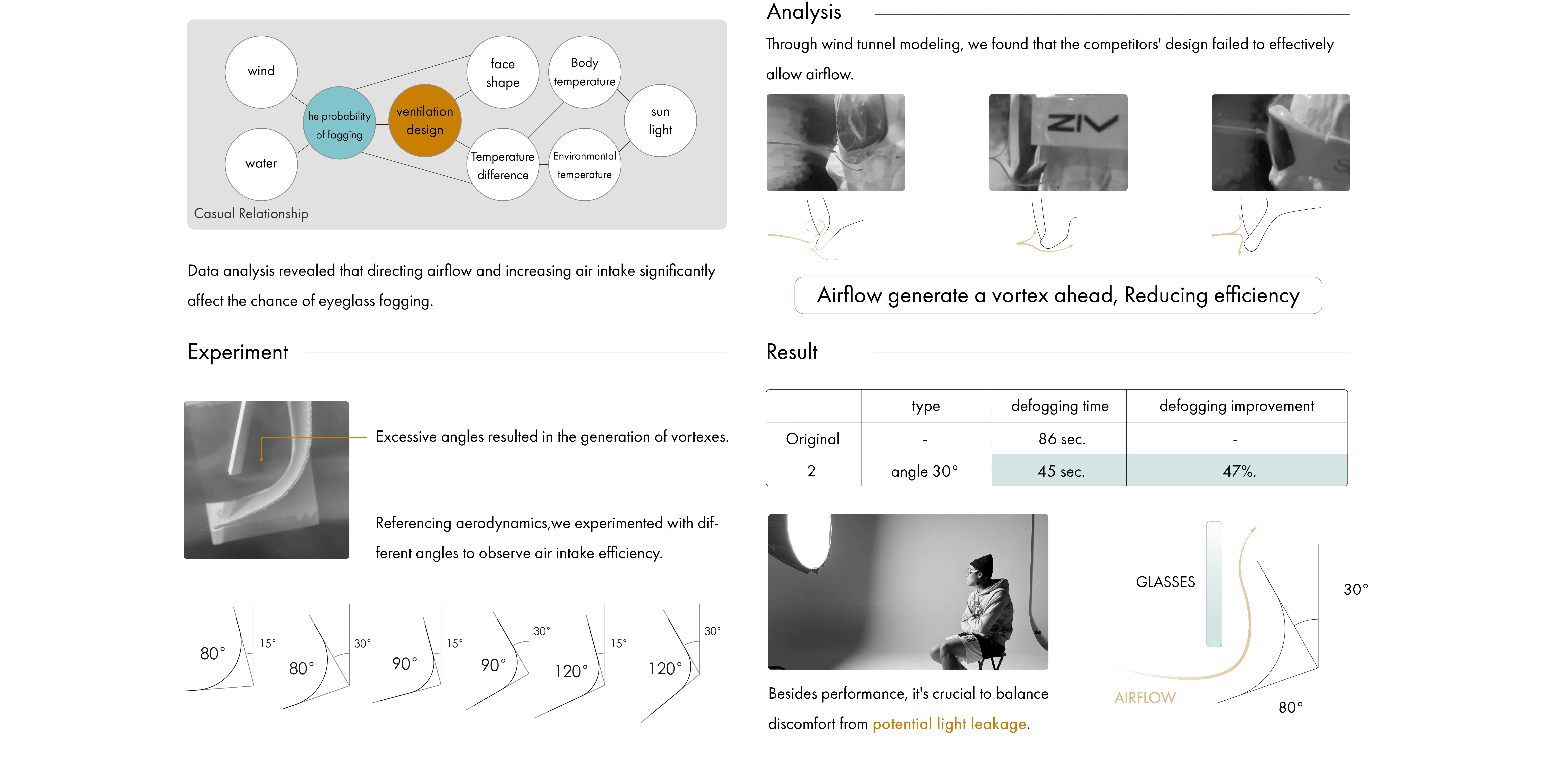
We tested multiple angles and frame geometries in a controlled wind tunnel to examine how airflow enters the eyewear.
By comparing configurations, we identified which shapes allow efficient airflow without causing excessive fogging or light leakage.
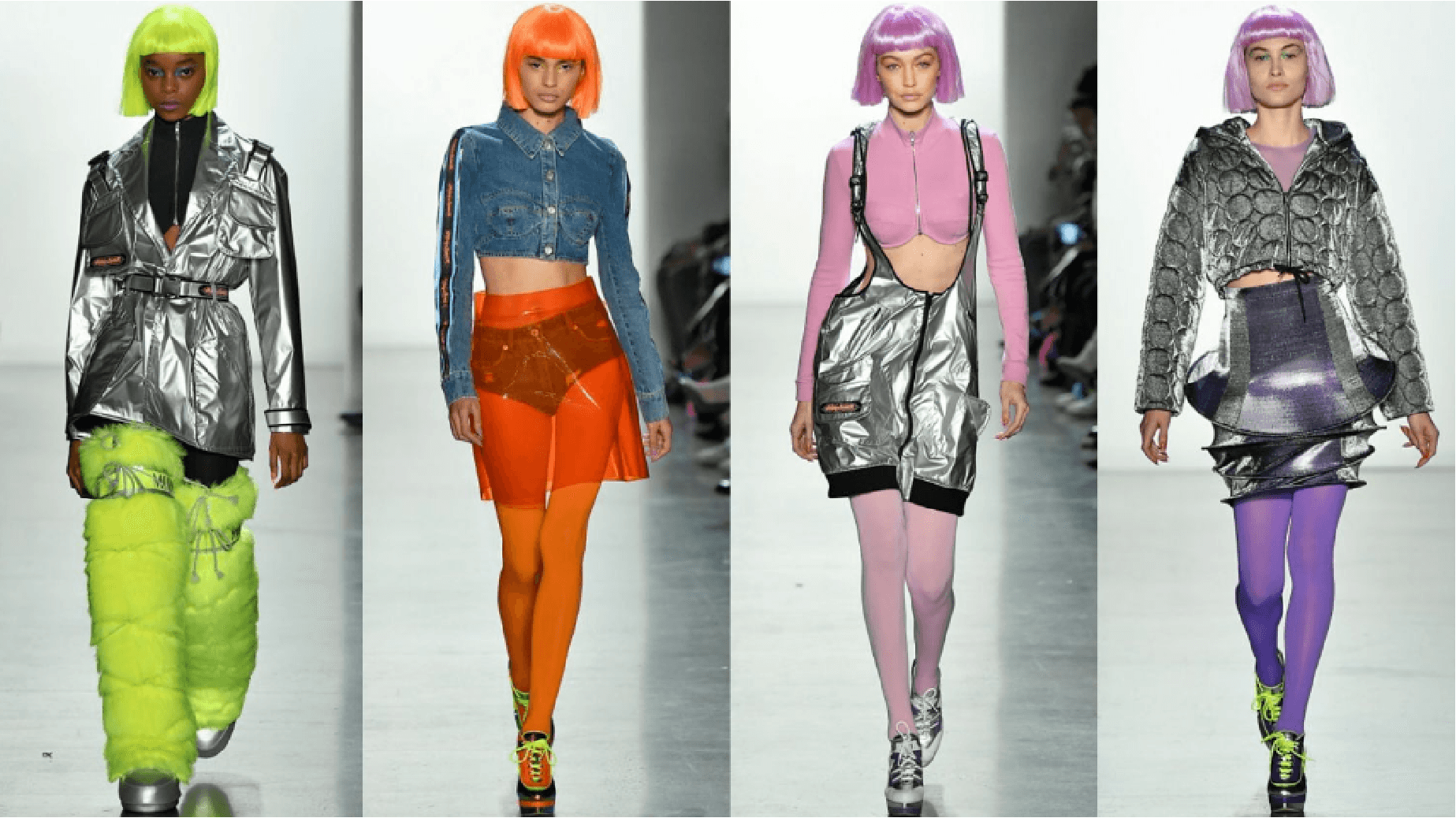
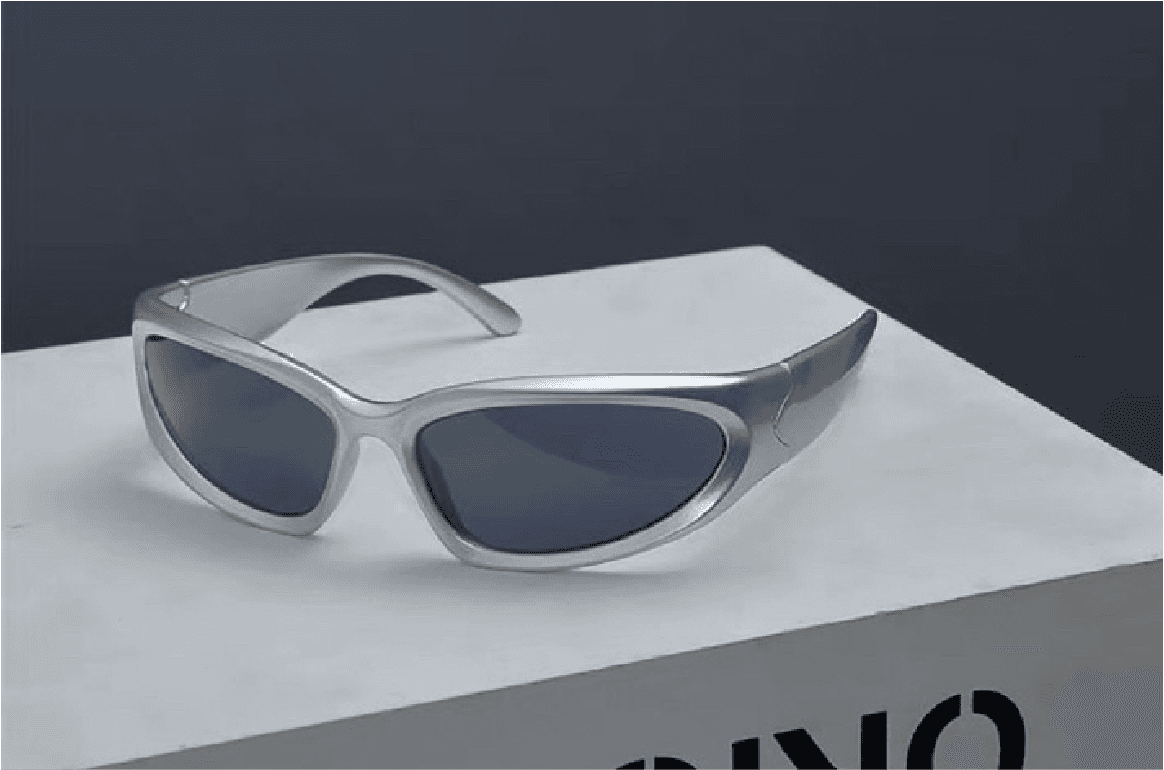
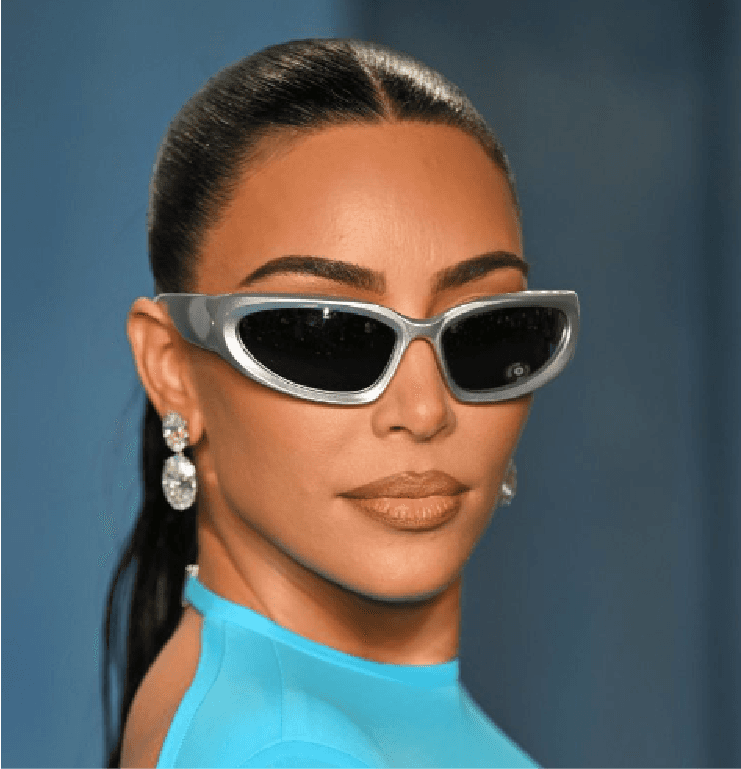
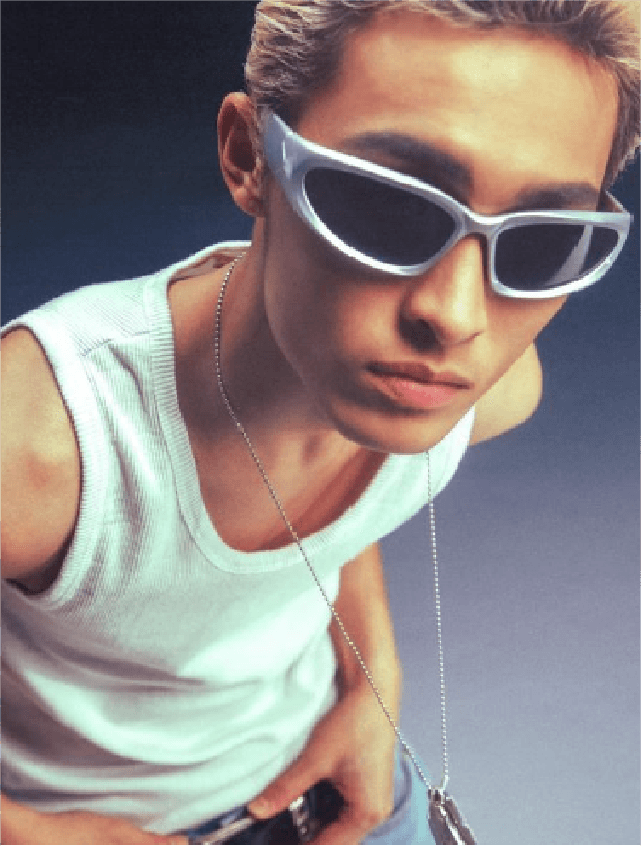
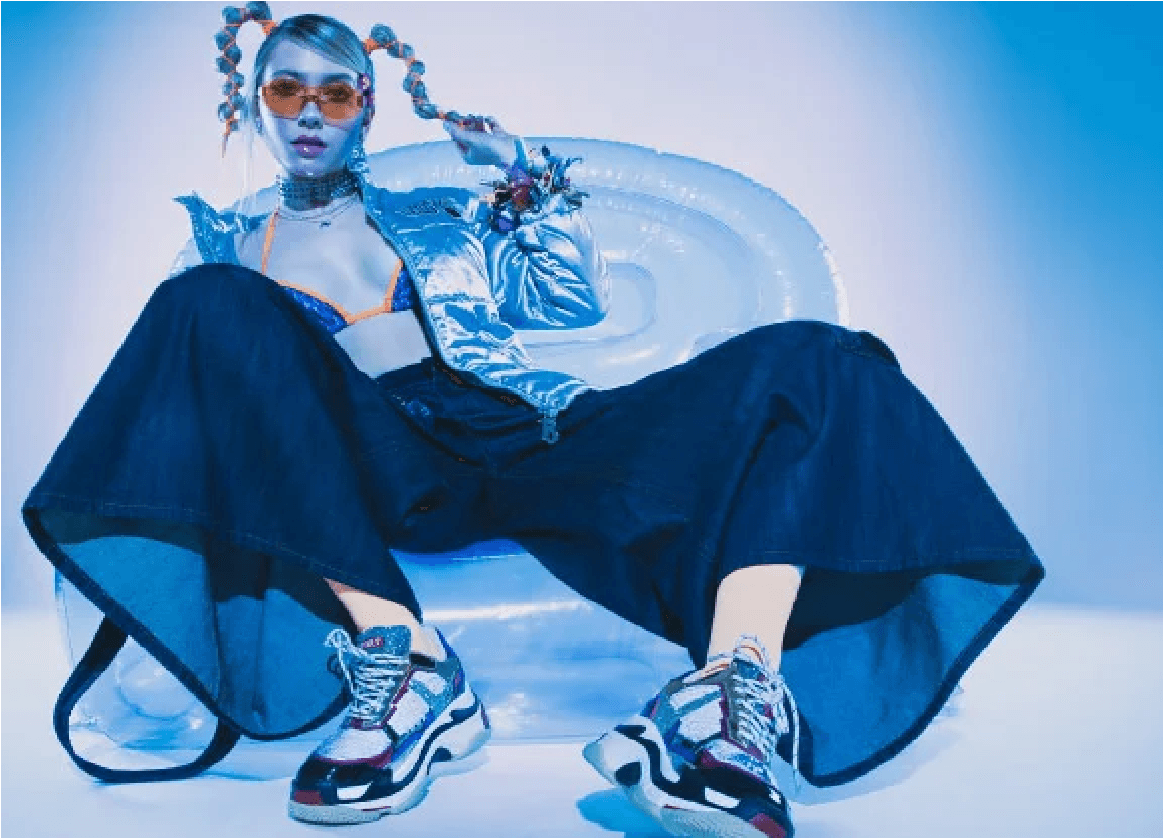
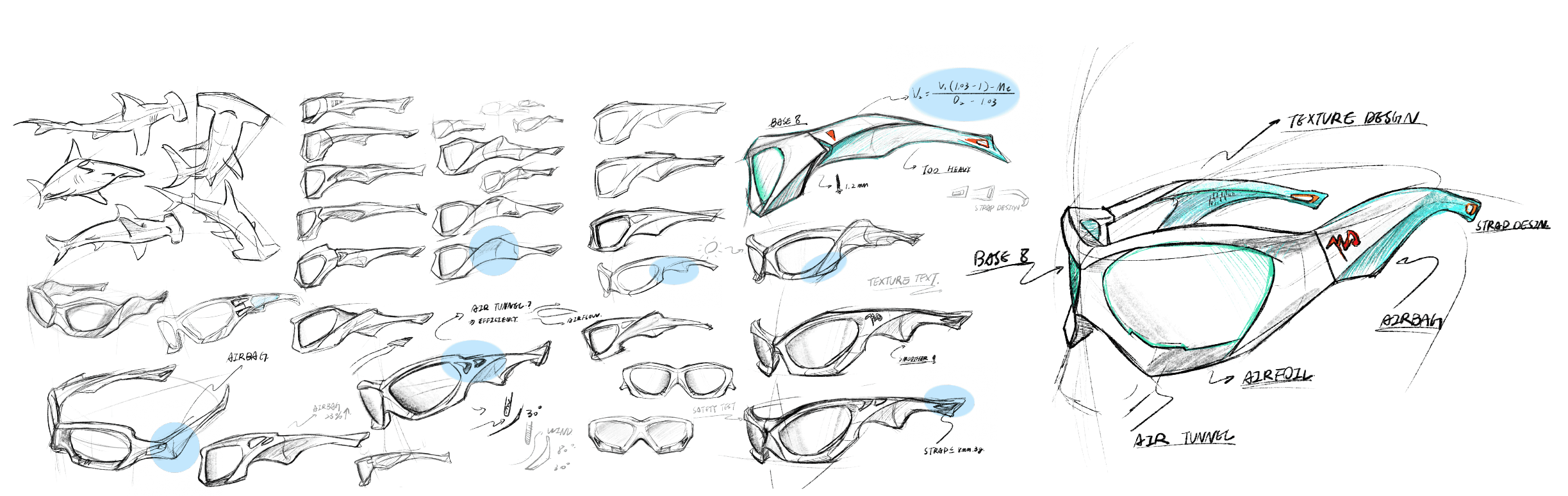
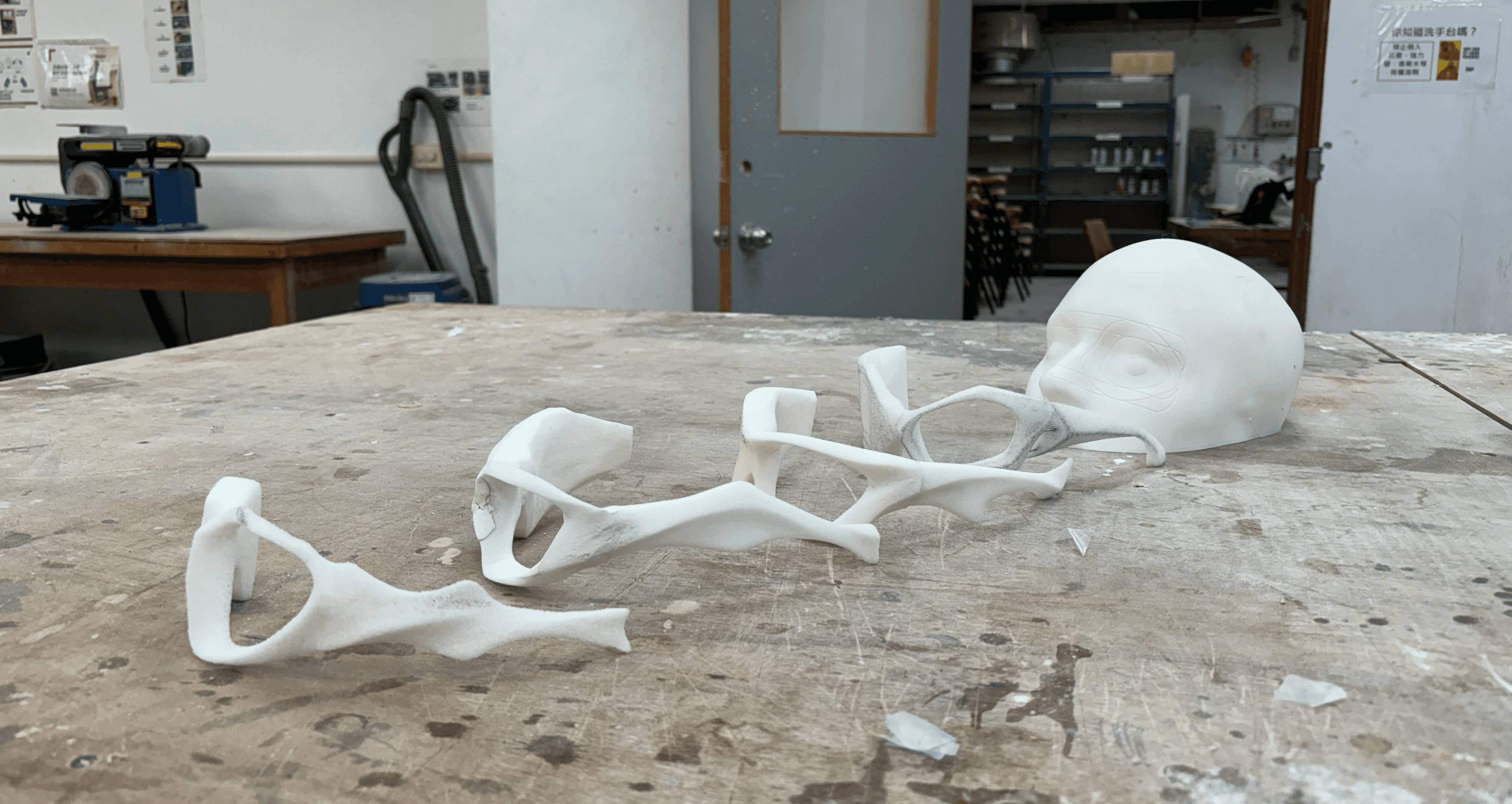
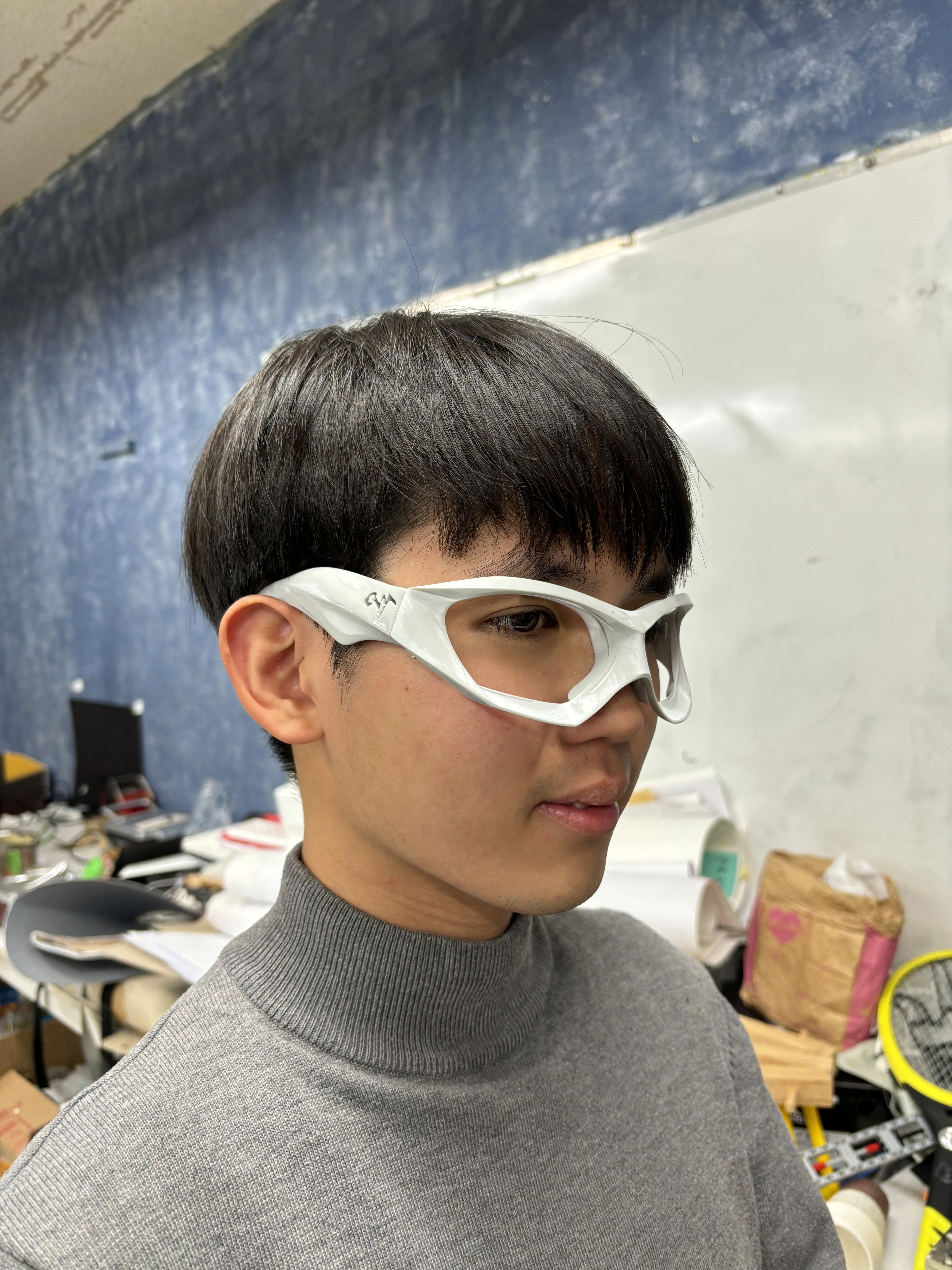
The final form combines insights from airflow and buoyancy testing with the company’s Y2K design direction.
The geometry reinforces functional needs such as ventilation efficiency and stability on water while adopting bold curves and futuristic silhouettes characteristic of Y2K aesthetics.

DESIGN POINTS
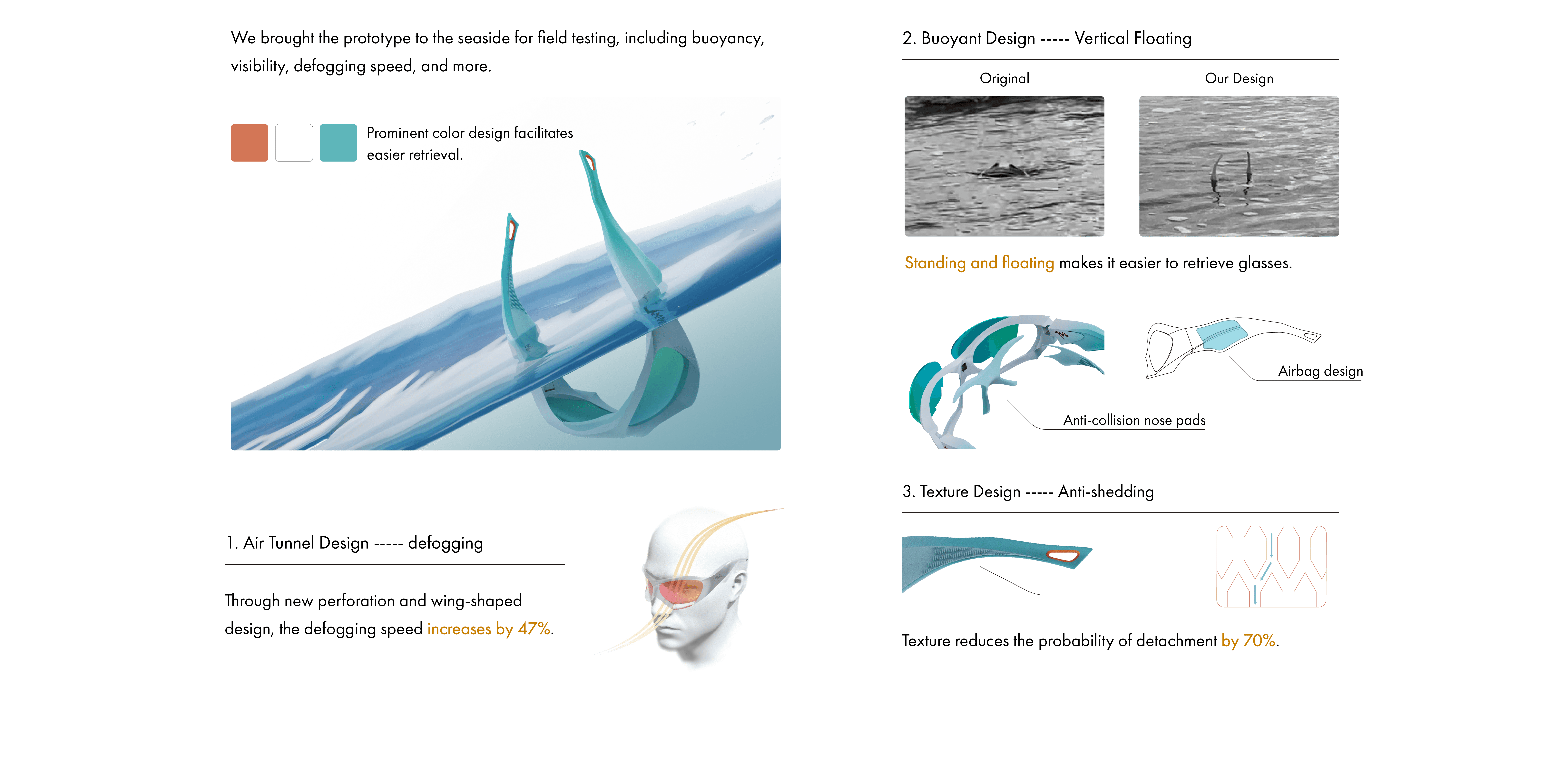
Original
Our Design
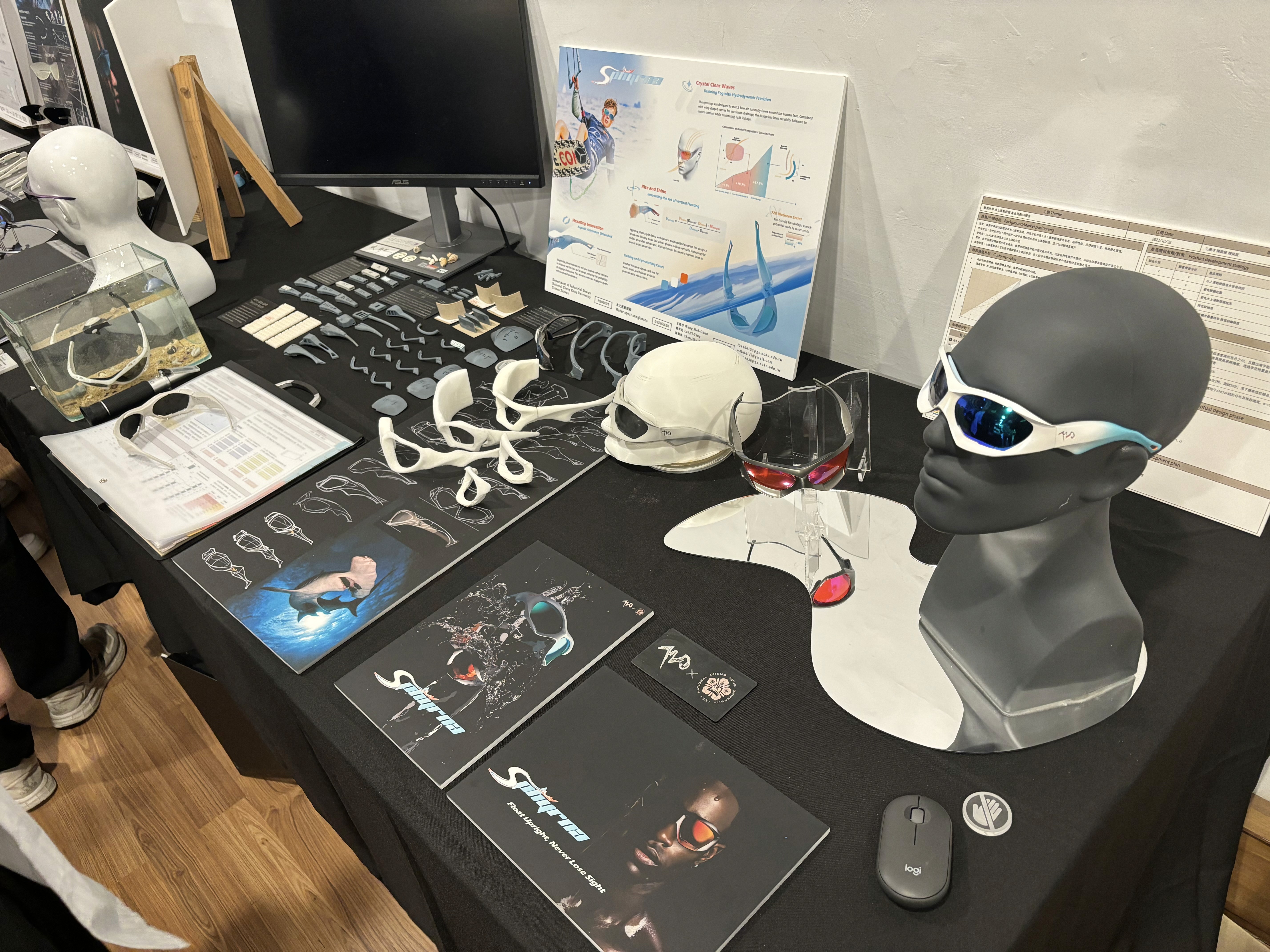
This was my first experience with lean design. It sharpened my ability to work efficiently while prompting deeper questions about how optimization and innovation can coexist.
The industry collaboration strengthened my collaborative practice, and even experiences outside the project, like learning to surf, broadened how I observe and respond to design challenges.