What if we could redefine time?
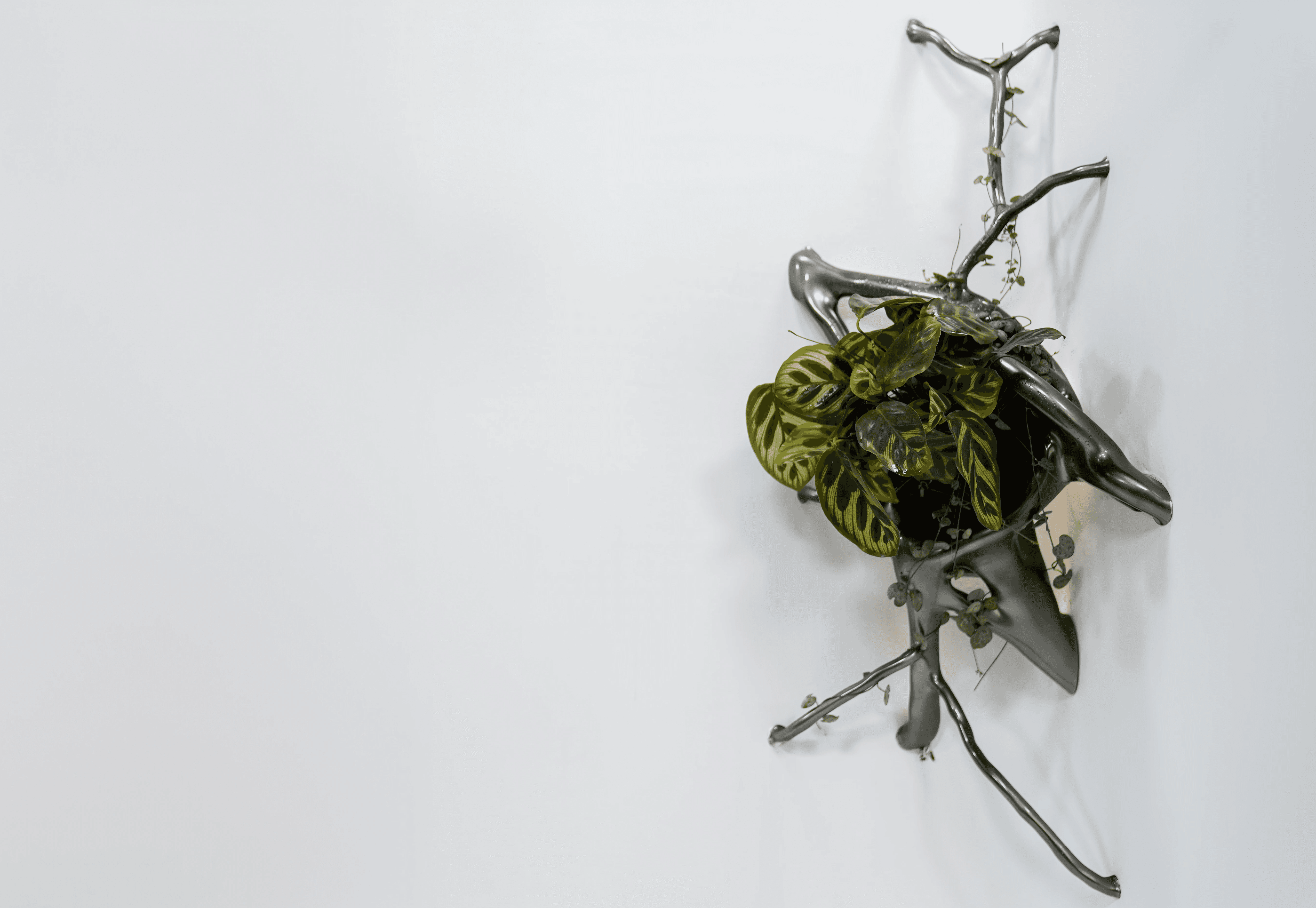
ANGLE PLAN(t) explores a time system led by a living plant. Using AI to read its daily leaf rhythms, the work translates biological movement into light and scent, suggesting a way of living aligned with natural cycles rather than mechanical time.
Project: ANGLE PLAN(t)
Designer: Yi-Ting Lai
Methods: A.I., Computer vision, Environmental sensing, Rhythm modeling, Generative simulation
Time span: 3 months
When: Spring 2024


How did the world work before time existed?
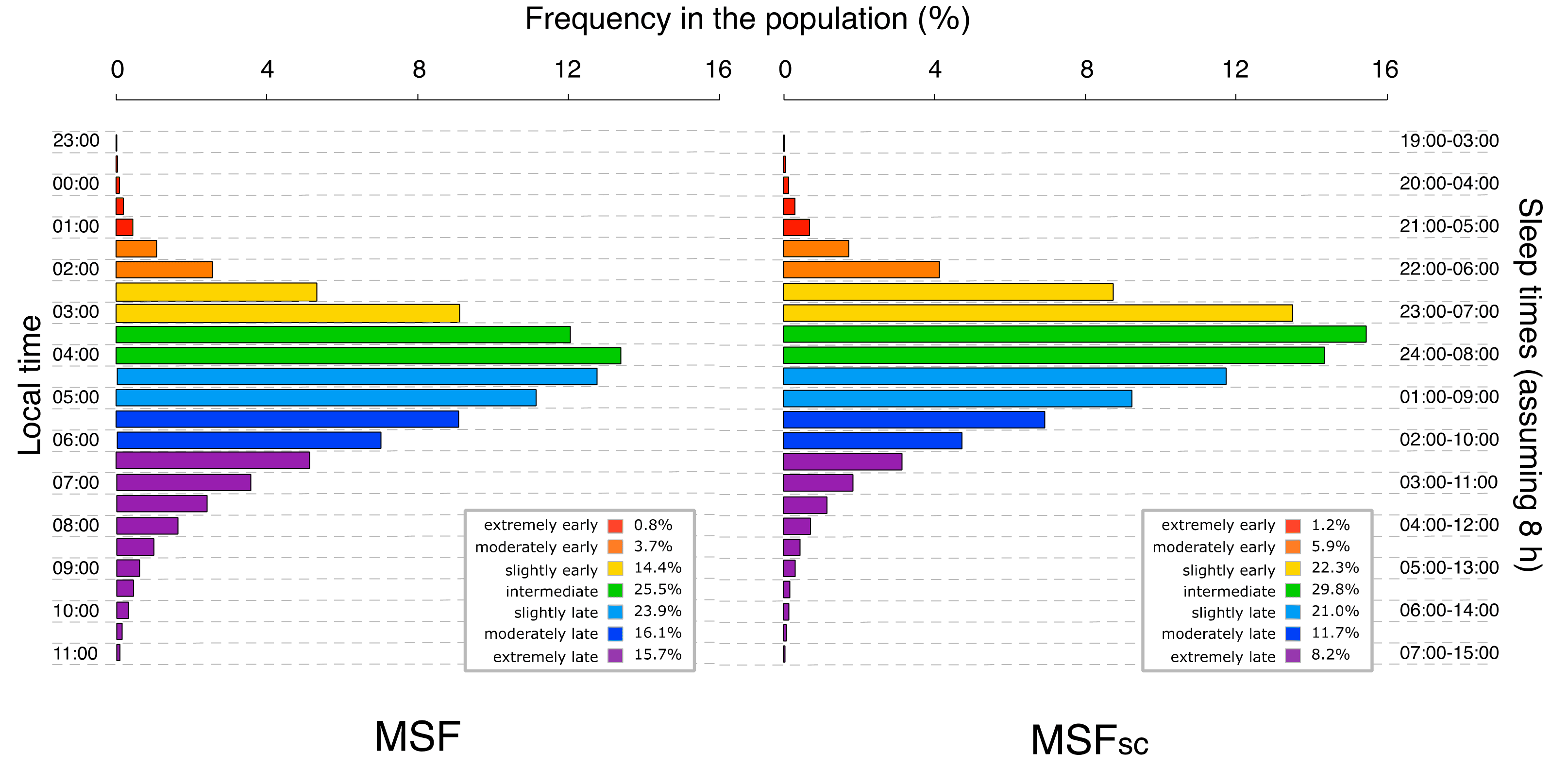
Long before clocks, natural systems signaled time through light, temperature, and biological activity.
These environmental rhythms align more closely with human physiology than standardized social time. Returning to nature offers a way to design time systems based on living, responsive signals instead of fixed mechanical intervals.
"Plants make time visible without measuring it."
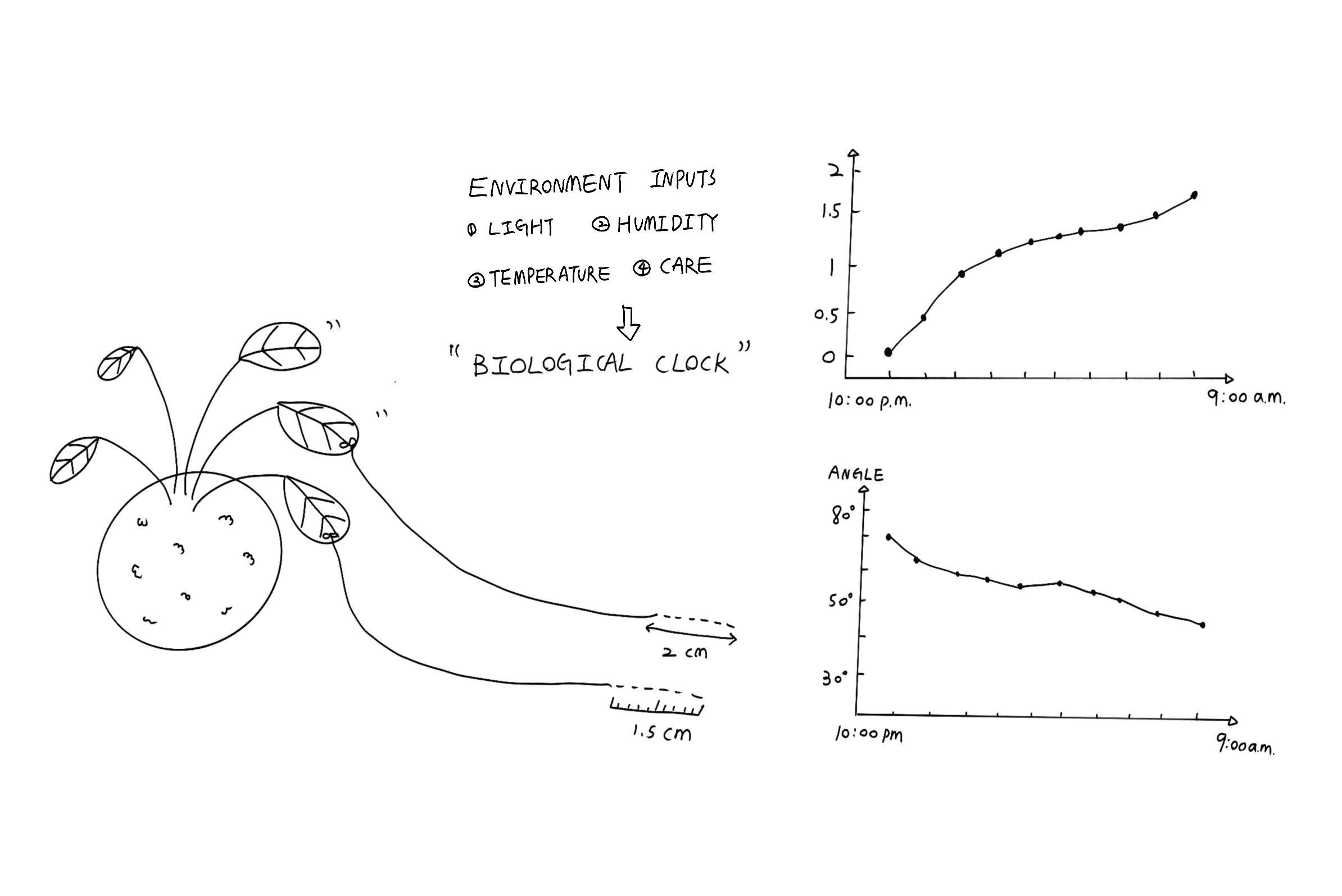
During my research, I came across the Peacock Calathea, a plant whose leaf movements make biological time visible through slow, continuous, non-verbal rhythms shaped by light, humidity, and care rather than schedules or clocks.
The Peacock Calathea was chosen because its leaf movements are visibly tied to circadian rhythms, making it an ideal organism for studying biological expressions of time.
Time-lapse footage from prior botanical observations shows the Calathea’s daily leaf opening and closing, revealing a natural rhythm that becomes the foundation for biological time sensing.
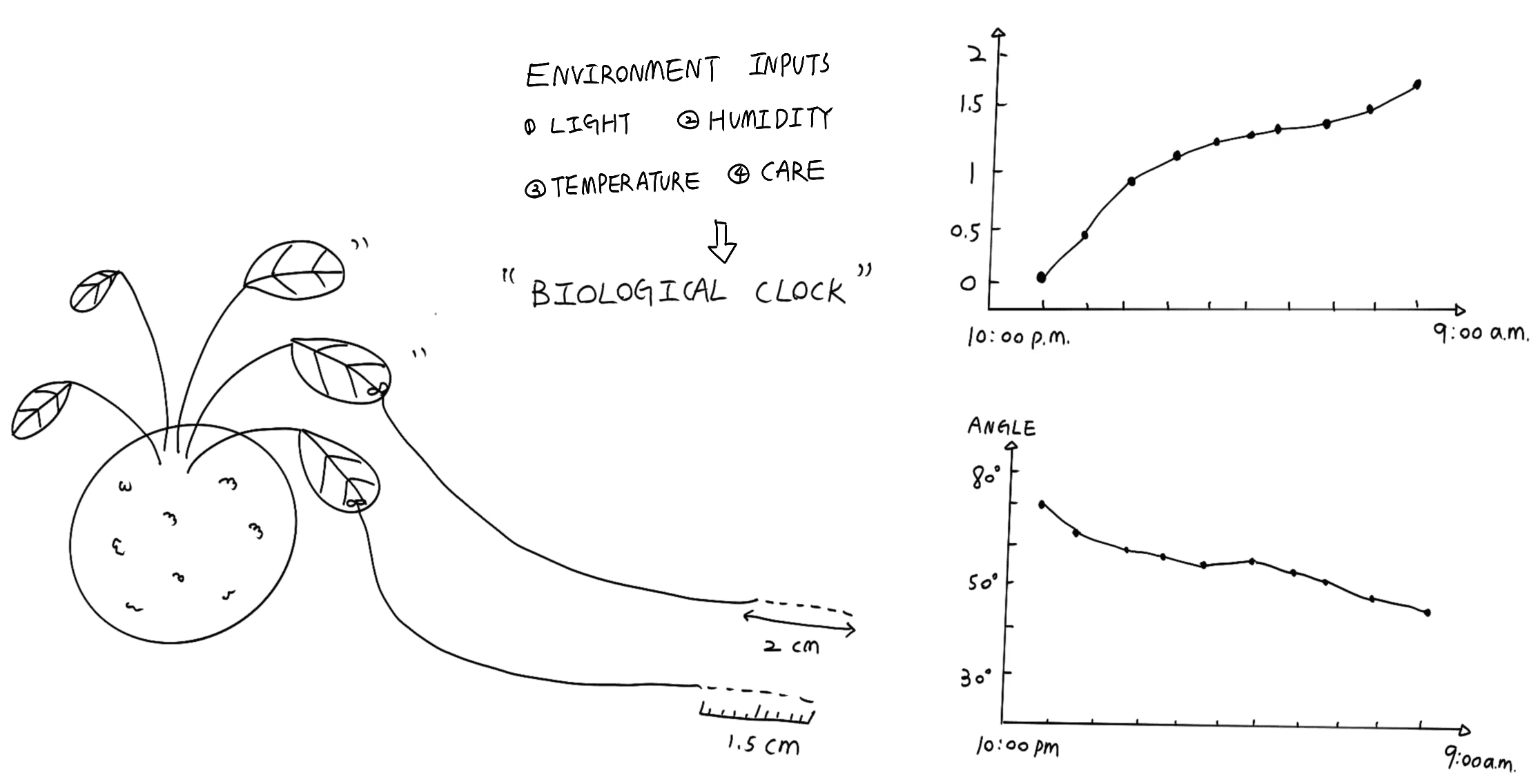
Time here is not counted, it emerges.
Plant movement is driven by internal water pressure, not mechanical control.
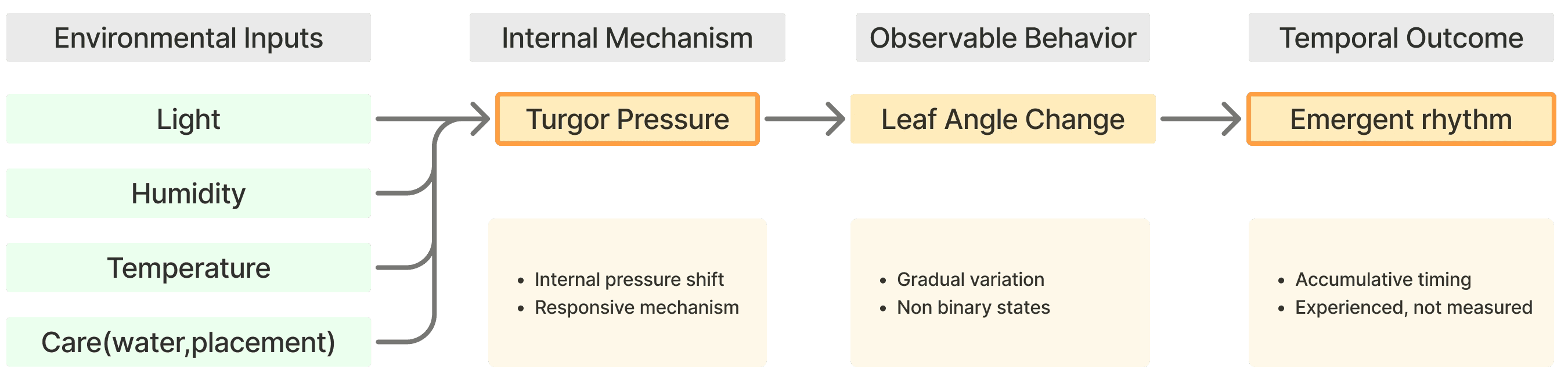
Naturalness ≠ Passivity
Natural rhythms are active responses to changing conditions, not passive background states.
Coexistence Requires Interpretation
Shared rhythms emerge through continuous interpretation of signals rather than fixed rules or schedules.
Micro Movements Carry Temporal Meaning
Subtle, continuous changes communicate time through accumulation rather than discrete markers.
“A Time designed by Life”
System Workflow
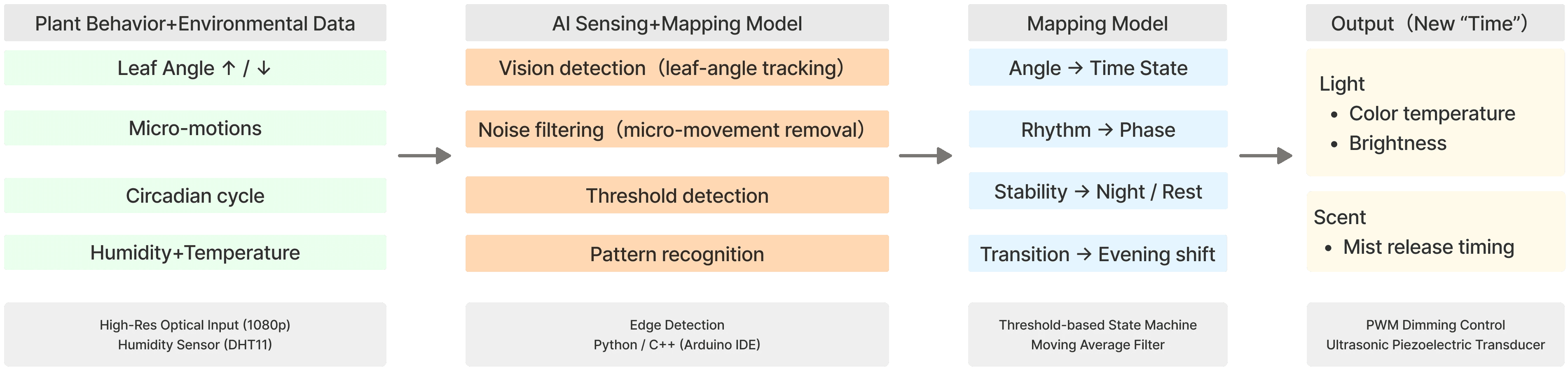
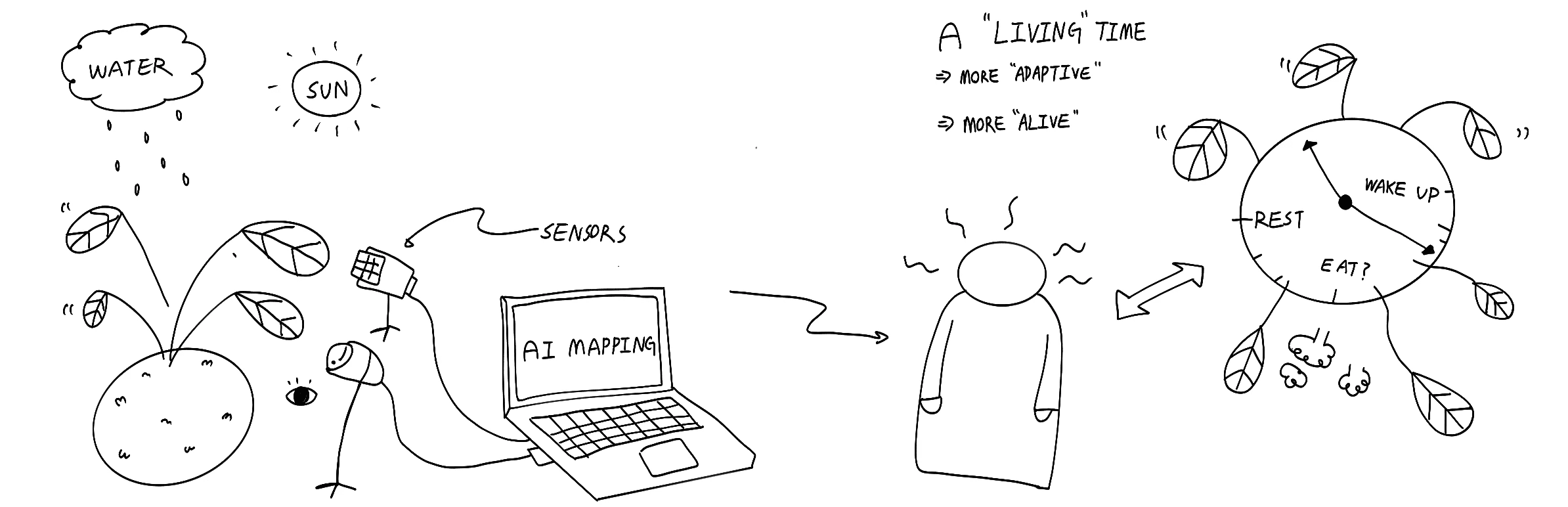
Using vision-based sensing and environmental data, the system interprets plant behavior to infer temporal states.
These interpretations are translated into non-measured temporal cues rather than numerical time.
Sensors capture humidity, temperature, and light to contextualize the plant’s circadian behavior.
AI vision tracks leaf-angle changes, extracting movement patterns as biological time cues.
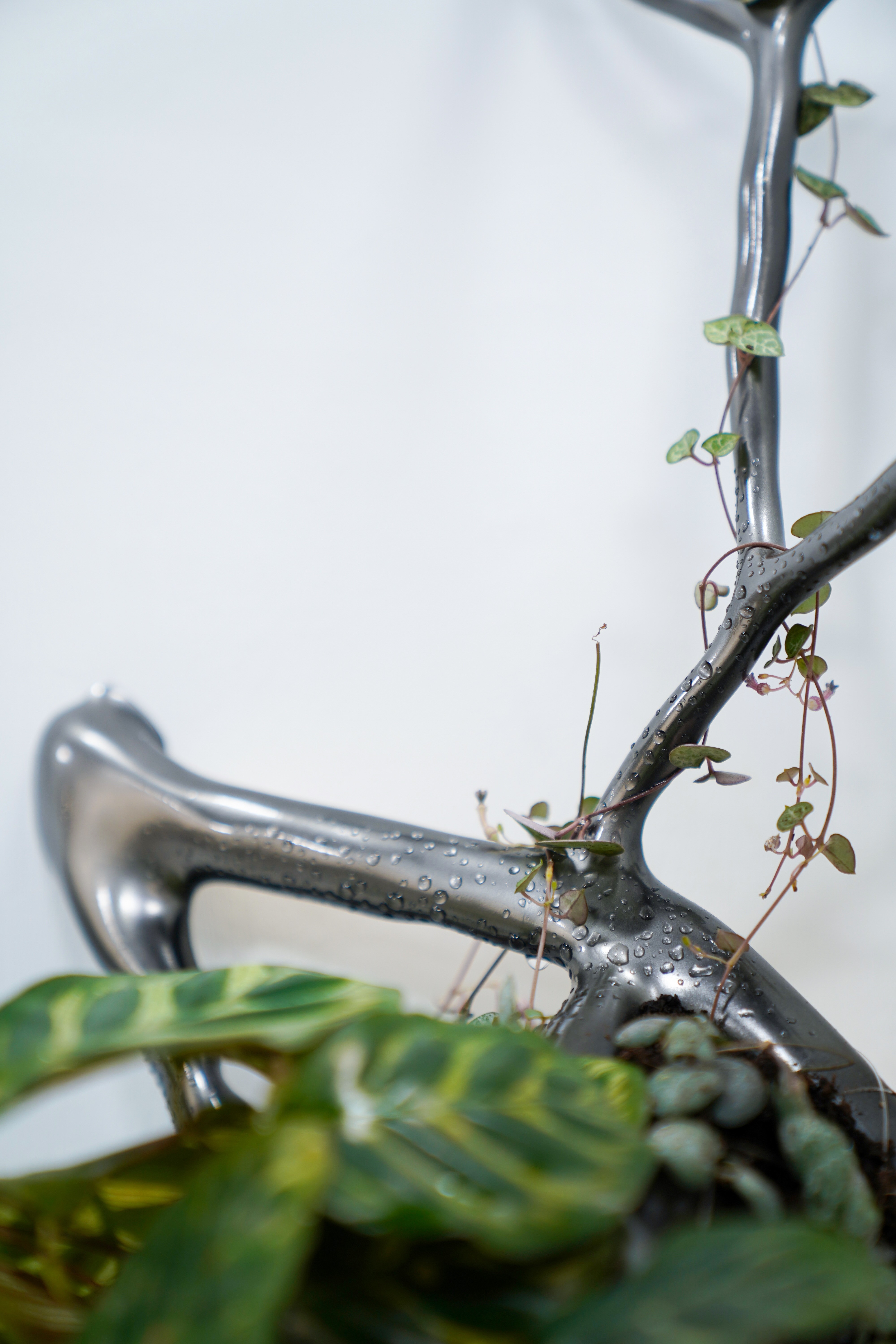
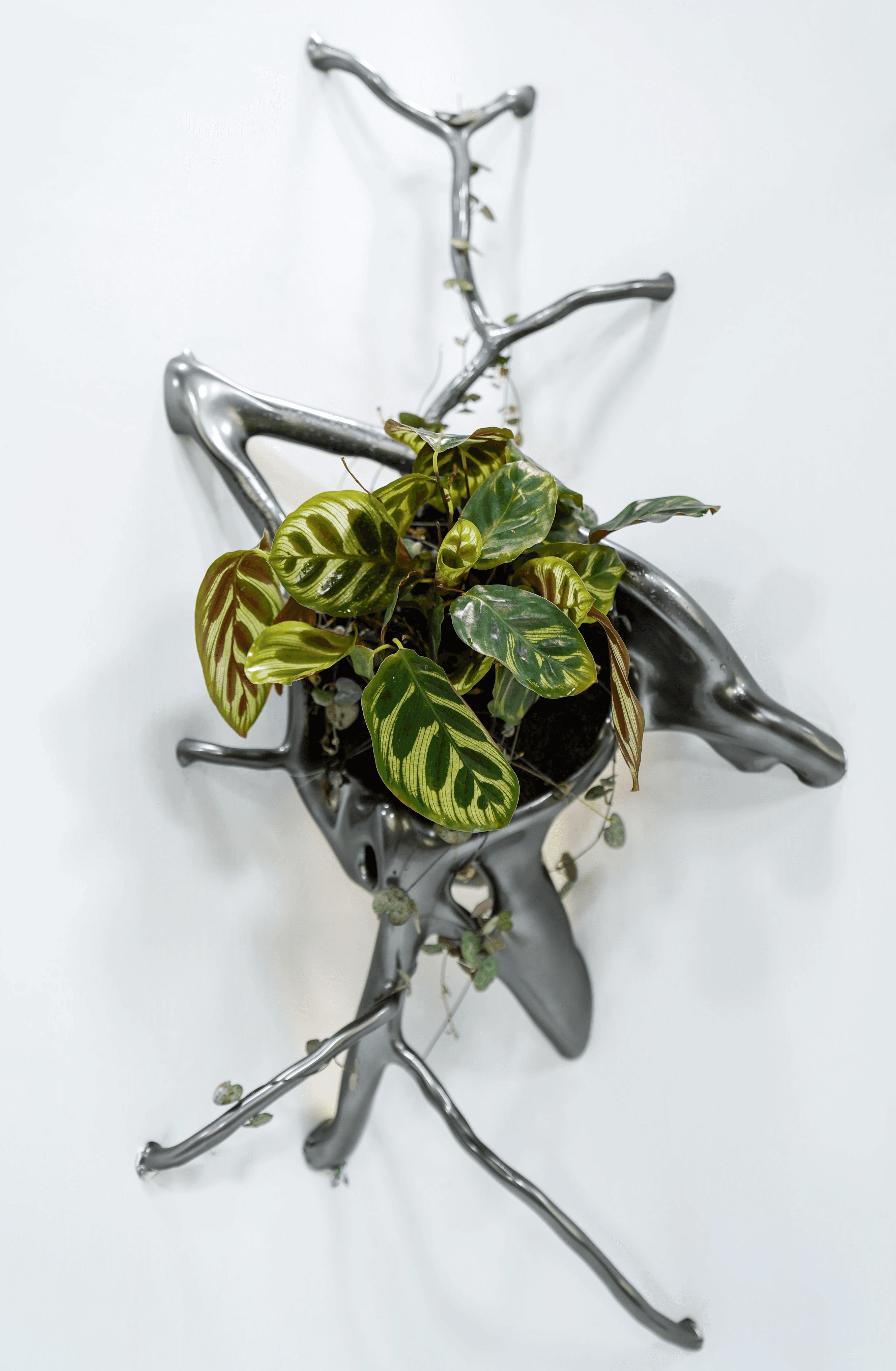
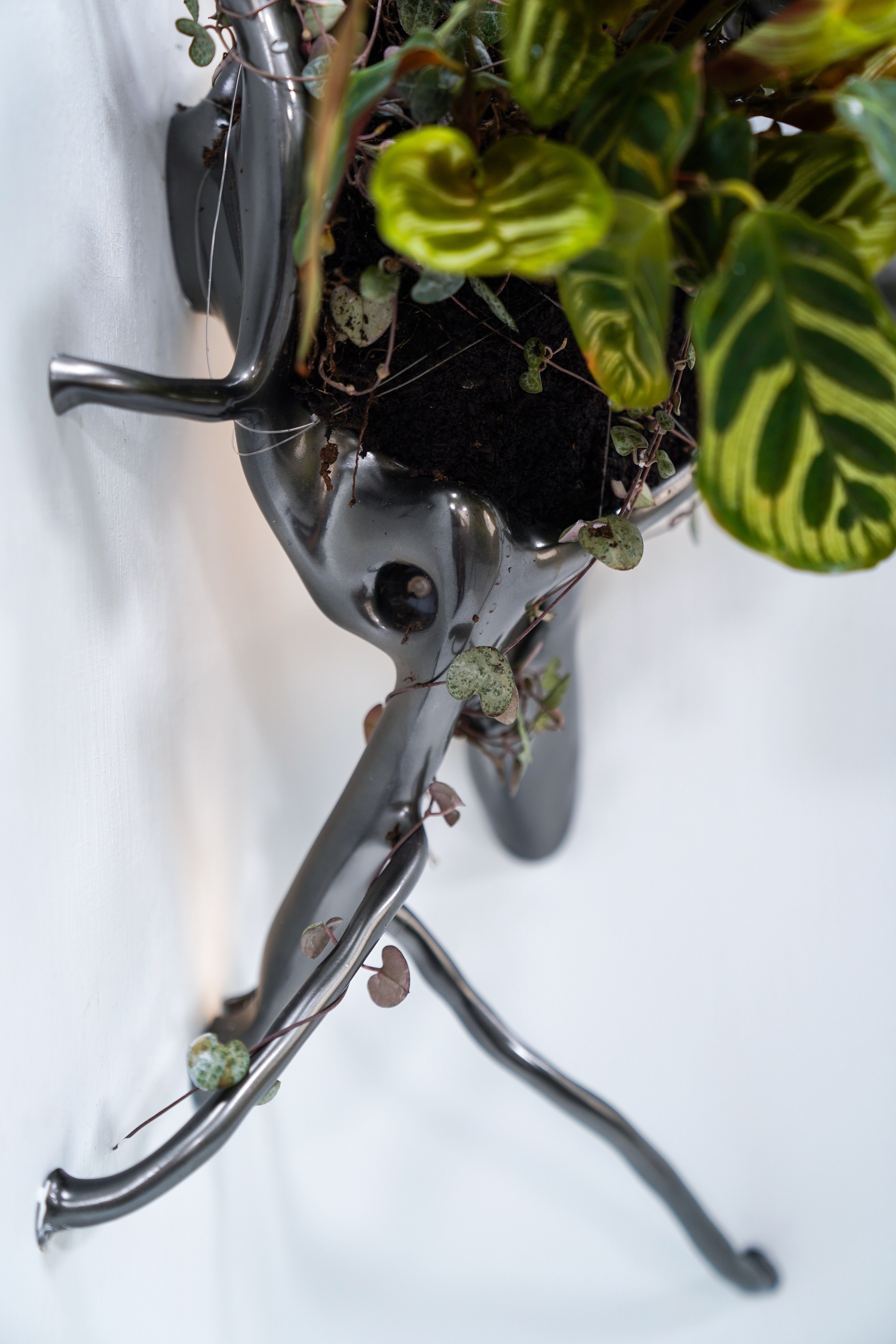
The form is designed to create a symbiotic relationship by treating the plant as the primary entity. Rather than enclosing it like a conventional pot, the structure adapts and grows around the plant’s posture and daily rhythm.
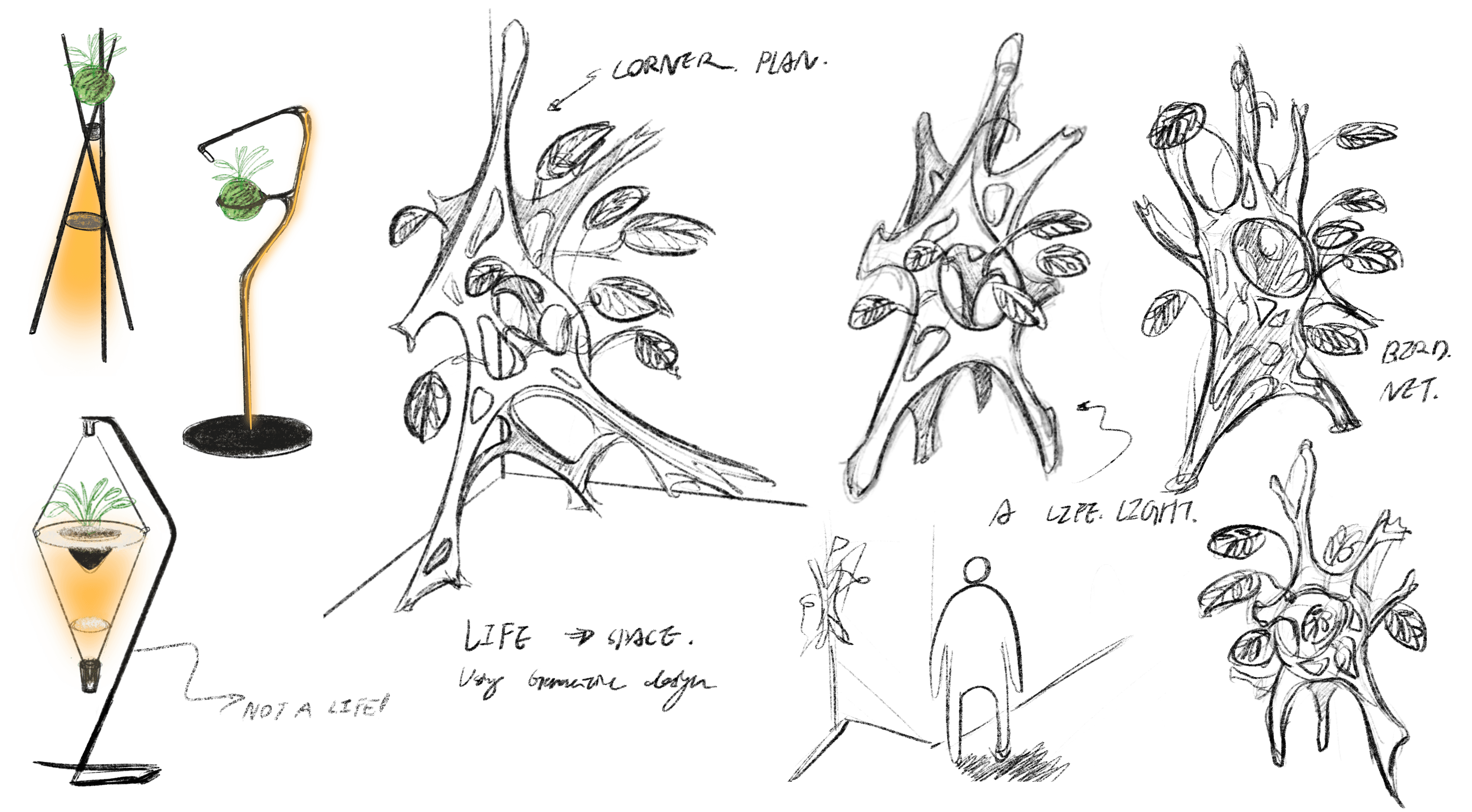
Using Fusion 360 to explore branching density, support behavior, and growth patterns that shape a structure capable of adapting to the plant’s movement.
The goal was to understand how the form could support the plant while maintaining openness, permeability, and a non-enclosing relationship.
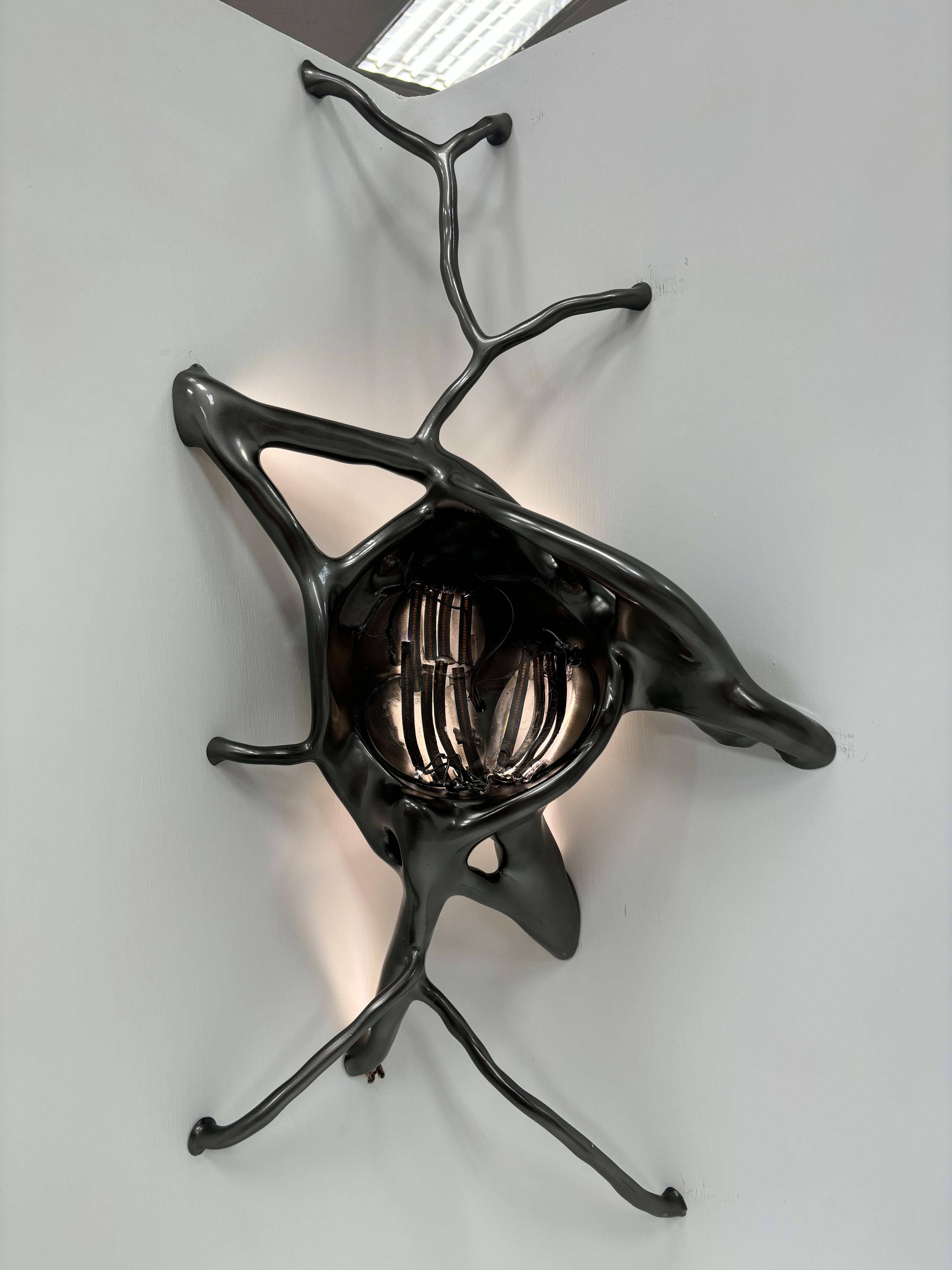
Testing warm and cool light responses to verify how the structure frames and diffuses different lighting conditions.
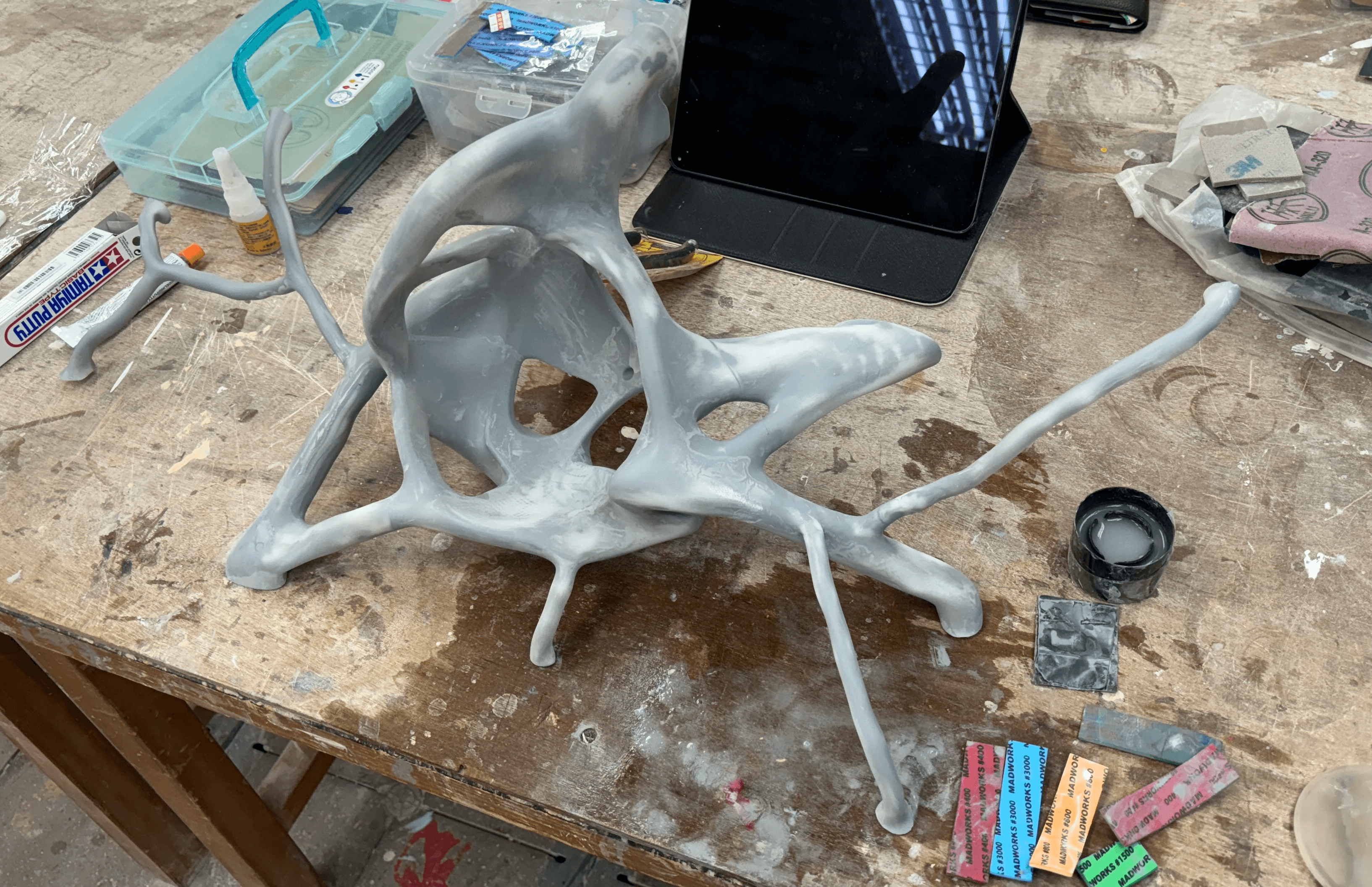
Examining waterproofing and internal wiring layout to ensure the form can support mist output and electronic components.
The system translates the plant’s daily rhythm into ambient behaviors in the space. Light and scent respond to leaf movements, forming a gentle temporal atmosphere shaped by the plant’s biological clock.
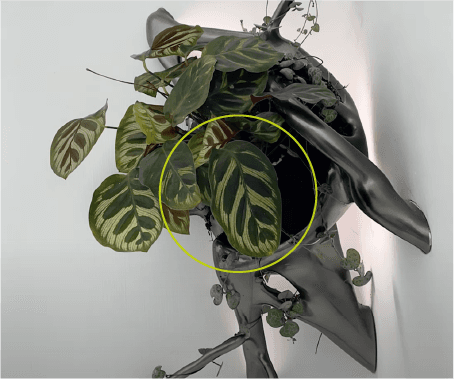
During the day the leaves lower and the light gradually becomes dimmer. The softer brightness reflects the plant’s natural daytime rhythm.
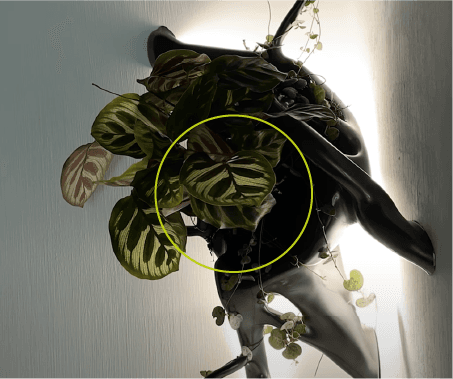
At dusk the leaves rise and the light shifts in temperature. It slowly moves between warm and cool tones, guiding the user into an evening transition.
User Loop

When the plant settles into its nighttime posture, the system releases a gentle mist made from plant based sleep supporting essential oils.
The scent allows humans to sense the plant’s rest phase, creating a shared cue that encourages both species to slow down and prepare for sleep.
Designing with a living organism changed how I understand time.
Instead of seeing it as a fixed measurement, I began to read it as a rhythm shaped by biological behavior and subtle environmental cues. As my first attempt at speculative design, I naturally carried product design habits into the process, but working with a plant pushed me to slow down, observe, and let the system adapt to the organism. This project taught me to design with life, not around it, and to let natural intelligence guide form, behavior, and meaning.
Special thanks to
Kyle Kao
小奚花園